Showing posts with label Frankincense. Show all posts

Thursday, October 8, 2020

The Use of Frankincense in Aesop's Fables


A handful of large frankincense tears from Oman by Michelle Krell Kydd 


Aesop was an ancient Greek slave and storyteller who lived between 620 and 560 BC, so it isn't surprising that frankincense appears in two of his fables; “The Crow and Mercury” and “The Mole and His Mother." Incense is deeply embedded in ancient Greek scent culture. It's the difference in how the aromatic resin is used in each of the fables attributed to Aesop that makes their inclusion interesting. 

In “The Crow and Mercury,” an ensnared crow prays to Apollo for help and promises to leave an offering of frankincense at the god’s shrine if he rescues him. The crow reneges on his promise after he’s freed, but soon finds himself ensnared a second time. 

A contemplative black crow by by Carl T. Bergstrom 


 The bird makes the same petition, but this time he directs his prayer to the god Mercury, who responds by reminding the crow of the unfulfilled promise he made to Apollo, ensnaring the crow in his false promise. It’s a befitting touché:  
A crow caught in a snare prayed to Apollo to release him, making a vow to offer some frankincense at his shrine. But when rescued from his danger, he forgot his promise. Shortly afterwards, again caught in a snare, he passed by Apollo and made the same promise to offer frankincense to Mercury. Mercury soon appeared and said to him, “O thou most base fellow? How can I believe thee, who hast disowned and wronged thy former patron?“ 
“The Mole and His Mother,” like “The Crow and Mercury,” is informed by ancient Greek scent culture. In this fable frankincense is used as a smell test versus a religious offering. 

The hand/paw of a European mole by Didier Descouens


When a young mole “insists he can see though blind from birth” his mother tests his sense of smell (as opposed to vision). The young mole identifies a few grains of frankincense as a single pebble, proving he can neither see nor smell: 
A mole, a creature blind from birth, once said to his Mother: "I am sure than I can see, Mother!" In the desire to prove to him his mistake, his Mother placed before him a few grains of frankincense, and asked, "What is it?' The young Mole said, "It is a pebble." His Mother exclaimed: "My son, I am afraid that you are not only blind, but that you have lost your sense of smell." 
Each fable features a protagonist that lies. A desperate crow makes false promises to gain freedom from a snare—he does this twice. A young mole exaggerates his visual aptitude and inadvertently conflates his inability to see or smell. 

When “The Crow and Mercury” and “The Mole and His Mother” are considered together, we learn that the promise of frankincense attracts the divine and its aroma exposes the truth. Consider this the next time you hold a few pieces of frankincense in your hand before setting them down on incense charcoal or an electric incense heater. 

Notes & Curiosities: 
Apollonius of Tyana threw frankincense into a fire as an offering accompanied by this prayer: "O thou Sun, send me as far over the earth as is my pleasure and thine, and may I make the acquaintance of good men, but never hear anything of bad ones, nor they of me." Apollonius engages in libanomancy, a method of divination using incense smoke (text from Apollonius of Tyana by Philostratus). Learn more about frankincense as it relates to ancient Greek religion on Hellenic Gods

Aesop’s Fables Online Collection includes a search engine that allows users to find content based on specific words, themes or terms. The list of Aesop's fables is alphabetically sorted (in four sections) which isn't the case on many sites focused on Aesop’s Fables. The site lists 655+ fables and is regularly updated. 

English translation of the two fables referenced in this article by Reverend George Fyler Townsend. 

Glass Petal Smoke highly recommends purchasing incense resins from Katlyn Breen of Mermade Magickal Arts and Dan Riegler of Apothecary's Garden. Both vendors sell quality incense materials and make their own aromatic products. 

Image of Frankincense (Boswellia sacra) from Dhofar by Michelle Krell Kydd. All rights reserved. 

Image of "Portrait of a Crow" by Carl T. Bergstrom via Flicker Creative Commons, some rights reserved. 

Image of a anterior leg - mole hand of a European mole (Talpa europaea) by Didier Descouens - Own work, CC BY-SA 4.0.

Thursday, December 13, 2012

Frankincense Shortbread Cookies


Frankincense flavor is no stranger to pastry. Thailand is famous for Kanom Kleeb Lumdual, an ornate shortbread cookie flavored with a variety of aromatics traditionally associated with incense (including frankincense). The pastry is perfumed with fragrant smoke produced by a u-shaped culinary candle called a Tian Op. It's a poetic process, but it isn't the best way to add flavor if you want to taste what's perfuming the smoke. Incorporating a touch of food grade essential oil of frankincense will add a palatable nuance that is nothing short of divine.


Frankincense, like mastic, possesses minty, evergreen, and citrus notes; aspects are sublimated when frankincense is burned as incense. These fleeting qualities blossom in shortbread cookie formulas and are subtly detected in the finish. There is an art to dosing essential oils to create this effect, one that is counter intuitive. Less is more as there is a fine line between eliciting "this is so delicious" and "what the heck did you put in my food" when using food grade essential oils.

 If you've added the right amount of frankincense the effect will be delicately transcendent. Glass Petal Smoke's recipe for Frankincense Shortbread Cookies does not include vanilla and that is intentional. The only flavoring agents are food grade essential oil of frankincense and a Jordanian liquor flavored with mastic, anise and herbs.

Frankincense Shortbread Cookies
Recipe by Michelle Krell Kydd
Yield: 70 cookies

Ingredients:
2 ¼ cups unbleached, all-purpose flour
1 cup powdered sugar
¼ tsp sea salt
1 cup unsalted butter (two sticks, room temperature)
2 tbsp plus 1 tsp Arak Haddad Mastic (a Middle Eastern liquor)
1-2 drops Aftelier Organic Frankincense Chef's Essence (a food grade essential oil)

Directions:
·      Divide the oven rack into thirds and preheat to 325 degrees.
·      Prep two cookie trays by lining them with parchment paper. Set aside.
·      Sift flour, powdered sugar and salt into a large mixing bowl.
·      Soften butter in a small glass bowl in the microwave so it is creamy in consistency (not warm or transparent). Use a fork to smooth it out.
·      Add Arak Haddad Mastic and food grade essential oil of frankincense to the butter and mix thoroughly. If you would like to use more frankincense do it one drop at a time, tasting the butter with each additional drop. The essence should be slightly noticeable; not intense or overbearing.
·      Add wet ingredients to dry ingredients and incorporate with a spatula. Once everything is roughly combined use your hands to mix the dough. Work the dough gently. When coarse crumbs begin to form work the dough thoroughly with your hands. Form a large bowl of dough when you are finished.
·      Roll teaspoon sized balls of dough by hand and place them on a cookie sheet in rows of five (there will be seven rows per sheet). Gently press each cookie with the end of a drinking glass so the oval formed by hand rolling at the center of the cookie is flat. Each ball of dough should be no bigger than one inch on the cookie sheet.
·      The baking time for these cookies is 20-25 minutes and includes turning the trays from top to bottom every 6 minutes as this shortbread formulas isn’t leavened and doesn’t include eggs. The cookies will be faintly tan around the edges when they are ready, and you will smell the butter just before it starts to brown.
·      Remove cookie trays from the oven and allow the cookies to cool down before placing them on wire racks to cool completely. Store in an airtight container.

Notes:
The dough used to make this shortbread can be flavored many ways and is especially suitable for baking with food grade essential oils as the fat content is high (great for even distribution of flavor, acts as a carrier) and the oven temperature is under 350 degrees (discourages evaporation of highly volatile molecules in essential oils that are responsible for flavor).

Aftelier's Frankincense Chef's Essence costs $12 for 5ml; a great price and just the right amount for a few rounds of baking.

Food grade essential oils that are "generally recognized as safe" by the FDA (section 582.20 of the FDA code) are not the essential oils sold in health food stores intended to be worn as perfume. If you are going to use food grade essential oils check the FDA GRAS list regularly and buy essential oils that are designated for baking and cooking. These materials are typically diluted between 1-3 % to make alcohol-based flavor extracts in the flavor industry, which is why one to three drops of food grade essential oil in a recipe will suffice.

FDA CFR Title 21, Part 172, Section 172.510: Food Additives Permitted for Direct Addition to Food for Human Consumption shows the genus and species of an ingredient which can be consumed and includes a limitations column for prohibitions based on particular constituents. Frankincense is also known as olibanum and can be found in this section of the FDA code with this nomenclature.

*Arak is an anise-based digestif common in the Middle East. Arak Haddad Mastic (distributed by Eagle Distillery) is made in Jordan and has a well rounded flavor as the anise is supported by mastic and herbs. If you cannot find this type of arak at your local liquor store a regular one will do, but you might want to use 2 tablespoons only and/or play with the balance of frankincense to tone the anisic quality that defines arak. If you like digestifs you can purchase Skinos MastihaSpirit (mastic liquor) and add a teaspoon of it to any basic arak and voila; you can duplicate the results had you been able to find a bottle of Arak Haddad Mastic. You can also tincture mastic resin in 190 proof alcohol and use a few drops of the mother tincture (at least 30 days old) in this recipe.

Wednesday, April 4, 2012

Chew on This: Mastic Gum and Evergreen Flavor Notes


Imagine you are at a restaurant waiting for the bill. You are presented with a miniature plate of resinous crystals by your waiter who enthusiastically proclaims that they are, "derived from the sap of the Chios mastic tree and infused with characteristic evergreen flavor notes." He tells you it is chewing gum and hands you the bill. You start to reflect on last year's Christmas tree and don't recall eating it. Foodlore tempers reason with meaningful details that charm taste buds out of assuming the worst (i.e. this could be unpleasant, make me sick or perhaps kill me). Understanding a little chewing gum history will put the evergreen spectrum of flavor and mastic into perspective (eliminating the need for a death scene in this imaginary scenario).


In the U.S. the most popular flavor chewing gum is mint because it freshens the breath and cools the mouth with a stimulating sensation (the latter is due to the response of the trigeminal nerve to the presence of menthol molecules). Mint's flavor is a shadow of the evergreen spectrum of taste found in mastic; the original chewing gum that is also the root of the word "masticate" which means "to chew." Mastic is not as cooling as mint; it is camphoraceous, verdant, slightly woody and possesses a faint trace of floralcy. The organoleptic quality of woodiness is comparable to cedar.


Historically speaking, tree resin was the first chewing gum in several cultures. American Indians chewed resin from Picea mariana (black spruce) trees. The gum was cultivated in the same manner that frankincense has been for centuries; by cutting the bark of the tree and allowing the sap to flow and form hardened tears. Native groups in Mexico chewed chicle, a type of latex which is derived from the tropical evergreen tree Manilkara zapota. Chicle was used by Charles Adams when he created the first American chewing gum in 1869 and started a gum chewing rage in the States, much to the consternation of schoolmarms and the etiquette-obsessed.


The earliest record of tree resin being chewed as gum goes back to A.D. 50. At that time ancient Greeks chewed a resin from the evergreen Pistacia lentiscus commonly known today as mastic. Chios is the fifth largest of the Greek islands situated in the Aegean Sea and it is where the finest mastic in the world grows. Natives of the Mediterranean island are familiar with a religious tale attached to their precious mastiha. Saint Isidore was tormented and beheaded because he confessed to being a Christian and refused to revert to the pagan beliefs of Rome. According to legend, when the dead body of Saint Isidore was thrown among the mastic shrubs of Chios they shed tears of sorrow. These resinous tears were transformed into the healing tears of mastic.


The ancient Greek physician Dioscorides may not have had a chemistry lab, but he possessed knowledge of the bacteriostatic properties of evergreen tree resins before the advent of modern science, as did other tree resin chewing native cultures and their designated healers. Folk medicine became fact in 1998 when research at the University of Nottingham proved that mastic gum kills Helicobacter pylori, the bacteria which cause peptic ulcers. In 2006 scientists at the Hellenic Pasteur Institute identified the active ingredient as isomasticadienolic acid (a triterpenic acid which is also found in certain species of Frankincense trees).


Modern chewing gums are carbohydrate syrup-plasticizer compositions inspired by tree sap ancestors. If you want a true mastic experience you can purchase Chios mastic online or at Middle Eastern groceries (it is sometimes stocked behind the counter). Putting a tear of mastic resin on your tongue may seem odd at first, but it easily softens with the heat of the mouth and is quite chewable. The texture is slightly waxy and the flavor is woody and evergreen, possessing a gentle pine-like resinous quality. Sharawi Brothers, a 46-year-old Jordanian gum manufacturer, makes their mastic gum using mastic flavor and a modern gum base. Sharawi Brothers Mastic Gum is less camphoraceous tasting than pure mastic and has notes of lime and under-ripe orange blossom. The sweetness in the gum fades quickly, but the mastic flavor lingers.

The application of evergreen flavors is not limited to chewing gum. In Turkey, Greece and the Middle East mastic is added to ice cream as it lends a supple texture and enhances flavor. Shatila in Dearborn Michigan sells Kashta ice cream which is made with mastic and flavored with rosewater. Mastic's presence is detected in the supple pull of the ice cream, its evergreen flavor notes sublimated by cream and delicate rose. A halwa version of Shatila's Kashta ice cream is sold in-store and is not available by mail-order. If you visit Shatila be sure to taste it; the addition of fresh walnuts and pistachios is exquisite.


Trygve Harris of New York City's Enfleurage makes a wonderful frankincense ice cream that riffs on the pine spectrum of evergreen flavor notes. It is decadent, refreshing and possesses a lingering sensual mouthfeel due to the application of food grade gum arabic which is dosed to texturize the ice cream a little more intensely than mastic. The experience of eating Ms. Harris' frankincense ice cream is akin to being kissed because of the way you have to negotiate the frozen confection when it is melting on your tongue. You have to eat the ice cream to understand this as words fall short of translating the actual experience. You also need a little luck when it comes to finding Frankincense ice cream at Enfleurage; it is only served at special events in the store. Jeni's Splendid Ice Creams in Columbus, Ohio sold frankincense ice cream last year, but you'll have to wait until Christmas 2012 to see if they will offer their frankincense flavor again.

Now that you know the story of mastic perhaps you'll be inclined to add "evergreen" as a descriptor to your culinary lexicon via personal experience. Evergreen flavor notes began bubbling up in the foodie world a few years ago. Heston Blumenthal rocked the Christmas table in 2009 using frankincense in a holiday entree. René Redzepi, chef at the Scandinavian restaurant Noma, made evergreen notes chic in several dishes and Fir a flavor to be reckoned with (a fact not lost on Clear Creek Distilleries in Oregon which makes Douglas Fir Brandy). Drinks flavored with evergreen notes of frankincense are already finding their way into a variety of mixologists' cocktails and frankincense bitters are commercially available in the U.K.

Mastic is a refreshing member of the evergreen flavor trend and is less terpenic (pine-like) than frankincense. Skinos Mastiha. a Chios mastic-based spirit, adds a gentle but complex evergreen twist to cocktails, with a faint woody floralcy that hints at violet. Mastic's ability to affect texture in foods by acting as a gumming agent is something chefs enjoy experimenting with so you can expect to hear more about innovative culinary applications of mastic in the future.

Notes & Acknowledgements:


"Luqum al-Qadi and the Porter" is a culinary tale in The Thousand and One Nights. In this story Scheherazade spins a tale about a humble gentleman who chooses dessert over a beautiful woman. If you can relate to this story pick up a copy of The Sweets of Araby: Enchanting Recipes from the Tales of 1001 Nights by Leila Salloum Elias and Muna Salloum. You can make some terrific sweets to accompany Kashta ice cream from Shatila.

If you are a gifted in the pastry making department you might want to prepare Culinary Flavors' Mastic Scented Galaktoboureko with Kataifi Phylo. If frozen delights are more to your liking Ice Cream Nation has a great recipe for Mastic Ice Cream. The pinnacle recipe for mastic ice cream is Nordljus'  Rosewater, Cardamom and Mastic Ice Cream.

Mastihashop is the official brand and store of the Chios Mastiha Growers Association. They sell raw mastic tears, mastic water, mastic essential oil (food grade), mastic flavor extract and other mastic-related products. Glass Petal Smoke recommends Chios mastic as inferior or adulterated mastic (made from almond trees and flavored with mastic oil) are sometimes found in the marketplace.

Thanks go out to Elena Vosnaki of Perfume Shrine. It was Elena who first introduced me to true mastic gum from Chios a few years back. The flavor has haunted me ever since.

The Chios Mastiha Growers Association website is rich with information on mastic. The recipe and research sections are worth a visit.

Photo of Chios mastic tree resin from a story by Diana Farr Louis on Kerasma: Greek Mediterranean Gastronomy. [The website is no longer live.]

Sharawi Chewing Gum Factory is based in Amman Jordan. It is common to find two spellings (Shaarawi) of the name as is indicative in the photo of the gum included in this post. They are one and the same. The gum can be purchased at Amazon though more competitive pricing is available in Middle Eastern groceries. Photo of gum by Michelle Krell Kydd.

Shatila will ship Kashta ice cream anywhere in the U.S. There is a four quart minimum order and other flavors to choose from. Their Kashta ice cream is priced at $7.00 per quart. Once you taste it you'll be glad there are three more quarts waiting for you in the freezer.

Photograph of pastry and Kashta ice cream at Shatila by Matryoshka. Her Tumbler page is enchanting; one can literally spend hours there. Rights revert back to Matryoshka. [The Tumbler page is no longer active.]

Master of Malt Frankincense Bitters are sold in the U.K. They can be purchased online.

Skinos Mastiha can be found at upscale liquor stores. Look for it in the section where you would typically find Ouzo and Arak. Some mastic spirits are made with anise seed and taste like Ouzo. Skinos Mastiha is not in this category which makes it all the more interesting to imbibe.

The allure of the exotic plays on the notion of pleasure and undiscovered territory.  Leon Samoilovich Bakst was well acquainted with this idea and it is evident in the costumes he designed for Serge Diaghilev in the Ballets Russes' production of Scheherazade (set to the music of Nicholai Rimsky-Korsakov.). The image of the Odalisque accompanying this post evokes this notion brilliantly. It is the openness of the Odalisque and her sensual glance that invites imagination and appetite. 

UNESCO recognized Chios Mastiha as part of World Culture Heritage in 2014; two years after this article was published on Glass Petal Smoke.

Friday, April 1, 2011

Inside the Olfactory Mind of Trygve Harris


Trygve Harris is the owner of Enfleurage, a haven for natural perfumers and fragrance enthusiasts. The store specializes in essential oils, frankincense, agarwood (oudh) and aromatic materials from around the world. Ms. Harris divides her time between New York City and a home in Salalah, Oman. She travels frequently, visiting suppliers in locations where ingredients are cultivated, harvested and distilled.

1.  What does your sense of smell mean to you?
It means so much that I don’t really think about it. It’s a way of perceiving the world and adds dimension, texture, resonance and meaning in the same way that sound and vision do. It’s part of the tapestry of perception. If I try to imagine existing without my sense of smell, the world would appear flat, colorless, uninspired and not at all interesting. It would be like television which doesn’t engage me at all. Without a sense of smell I imagine life to be more watched than lived.

2.  What are some of your strongest scent memories?


The best one is that smell you get in the San Fernando Valley in the late afternoon and early evening, with the sprinklers on everywhere and the water evaporating on the driveways. I just love that and I rarely get to smell it now. It even had a little audio soundtrack; the tick-tick-tick of the sprinklers.


Gasoline, of course, and junkyards! I loved those. There were a bunch of really cool giant junkyards in southern Los Angeles County that we’d drive past whenever we went somewhere, with crushed cars by the hundreds. You could smell the fierceness and violence of all those destroyed automobiles and there was an undertone of oil refinery that accompanied it. I can’t remember where the refinery was except that it was near the junkyards.

When I was very young we had a house in Palm Springs, in the Movie Colony, where we would go on weekends. The way it smelled when we arrived was unforgettable: the dry crisp desert air, the oleanders, the baked clay and stone outside, the breath-holding expectation and stuffiness of the house, the way the shag carpet and rice paper doors were impregnated with something of the recesses of earth, the huge beetles that swarmed out of the drains when you opened the taps, and the metallic smell of the water. All of these sensations combined could be described as the smell of the California desert.


When I was growing up my mother wore Chanel N°5 but that’s strange for me because what I see today on the duty free shelf is not the Chanel N°5 I remember. My father always wore wonderful cologne but I have no idea what it was named. I also recall the smell of cigarettes because both of my parents smoked Camel® non-filters. There are some cooking smells: sopa de fideo, marinara sauce, Bertolli® olive oil, garlic and tomatoes.


Oh, and brush fires. It must have been 1968 or so and the whole San Fernando Valley was burning. It was the Chatsworth Fire. There was so much smoke it was hard to breathe and you could see flames in every direction tearing up the hills. You could hear the roar and smell chaparral, eucalyptus, sage and whole hills erupting. Then there’s Agree® shampoo. The first guy I lost my mind over used it. That formula is being used by another company today, and I don’t know which company or what it’s used in, but it’s sold in Salalah. Occasionally I get a whiff and nearly give myself whiplash. 

3.  What are some of your favorite smells (things in nature, cooking &/or your environment)?

Mysore sandalwood has no peer in this world; glorious. My house! I love the way my house smells! I burn a lot of a bakhoor, Oudh Mubakhar from Ajmal, as well as agarwood (oudh) and frankincense; that’s an ever-present undertone that has seeped into the porous material of my house. I really love the smells of the structure itself, particularly of my home in Salalah. I can’t tell you what it is exactly, other than the way my house smells and I don’t want to know, actually. It might be something I’m better off not knowing.

I love the way fires smell in the fall. Even in Salalah, which really has no fall, you can still smell these lovely wood fires. I love flowers, of course: acacia, jasmine, tuberose, quisqualis, citrus blossoms and roses (those crazy powdery red ones in Salalah). While I love the smells of the tropics in general, wet and heavily loaded, I am excited and thrilled by drier places: clean desert air and sand, sagebrush and chaparral, wild mountain herbs and valleys, the Santa Ana winds, the Salalah winter wind. I also love how it smells when someone I love is cooking for me; never mind what they’re cooking. A large part of what I love is how an intention smells. There’s also the impression that smells make. The sea smells like calm. (I love the smell of the sea and am partial to the Pacific and Indian Ocean.) Then there is the smell of home; home smells like everything’s going to be all right.

4.  Do you have any favorite smells that are considered strange?

I like the smell of gasoline and used to think that was strange, but many people like it. I like the smell of the steam that comes out of manhole covers in New York City. It’s stronger in the summer, and it probably smells like crap, but I love it. I also like the way the Doha Airport smells. Many people would consider my love of oudh strange. Let’s face it: its animal, sex, shit and a whole host of unnamed emotions right up in your face. I assume that most people hate it, unless they're aroma geeks or Arabs. That's the big bonus of living in the Middle East—everyone loves oudh.

5.  Describe one or more of your favorite cooking smells.

Vanilla! Although I am not a baker, it’s exciting for me to smell it; it’s warm and cozy yet has some kind of erotic promise. It has a kind of central bloom and generates a living heat. It’s soft and very nurturing. There is much I don’t understand about vanilla and I am ready to find out more about it. Coffee, of course, a smell so intractable that a day without it beckons cold, gray and bleak. I can remember all the days of my life when coffee did not materialize.

6.  What smells do you most dislike?

It’s a horrible thing to think about! Decay is what I most dislike. Between 1996 and 1997 my old Jones Street store in New York City was situated in a building with a terrible rat problem. Even though the store was sealed and we didn’t get rats inside, they died everywhere: in the hallways, in the basement, in front of the store, on the steps—everywhere. The superintendent didn’t clean up the mess until the carcasses were in an advanced state of decay. As a result, I am better versed in death smells than I want to be. I can tell how long rats have been dead and how the smell changes when they start to liquefy in the summer heat. I used to patrol the outside of the store with a super-sized spray bottle of water and peppermint oil, and ambush the (living) rats with it. I am hyper-attuned to death smells and will catch the tiniest whiff of them as I walk through any city and am usually the first (and sometimes only one) to notice them. Fermenting garbage, like the kind you find in New York or Mumbai, has this decay smell too.

I also dislike the smell of processed food like McDonald’s®. Getting into the elevator with someone who has a bag of that makes me gag; it’s hideous. Processed cheese, old frying oil, margarine, there are bunch of chemicals that go into corporate food and if you can’t smell them as you’re eating them, you can sure smell them coming out of your pores later. When I was a kid I loved McDonald’s® and Doritos® and all that stuff as much as the next kid, but I think that my body just rebelled on an organic level. Processed food doesn’t smell like food, it smells ugly. It smells like chaos.


The way the World Trade Center smelled as it burned was horrible: unknowable plastics, molten steel and barbecued flesh. There was an acridity that wove in and out of the already hideous mix of melting things you were never supposed to smell burning, and then the burnt flesh poked through every so often, making its point again and again. The visuals went along with it; little green fires, melted building faces, a shower of unknown lethal flakes—everything.

7.  What smell did you first dislike, but learned to love?

It was the smell of my dojang. When I first started martial arts I can’t say that I hated the smell of my school, but it was a little strong. It smelled like a gym; something I despise the smell of. It quickly became a smell of home, escape and serenity. Even the locker room was wonderful, although it was rarely cleaned and the showers were moldy and some people just left their uniforms there for weeks. When I entered that front door it was like sinking into a bed of bliss. Objectively speaking, I knew from the reaction of my friends (who I would force to come and visit) that the smell there never actually improved.

8.  What mundane smells inspire you?

 
Cedar as in cedar pencils; there’s a quick flash of wanting to start something fresh. The aroma of coffee inspires me too, though there is nothing mundane about that smell. Citrus blossoms awaken my senses, but they don’t motivate me in the direction of starting a project or working, they affect me in a more languid and sensual way.

9.  What scent never fails to take you back in time and why?


I love the way horses smell. Even though I grew up in Los Angeles and Santa Barbara, both of those neighborhoods had horses. I had my own horse for some time when I was 10 or so. I always think of him and the time we spent ambling in the foothills whenever I smell horses. We were both babies then so our relationship was rather stormy, but we lived though it and enjoyed our times together, at least I know I did.

10.  What scents do you associate with memories of loved ones?

That’s interesting to think about. I started out digging through my familial past, but that’s not the only place to find memories of loved ones. I’ll take “loved ones” in another sense. Everyone has their own scent, as we all know. Even though I think many, if not most people are driven by this, my entire love life has been run by my sense of smell. It’s not only chemistry. I have known a few men whose smell was enough to make me behave in ways I still can’t believe. So, if I get a whiff of something like that smell, something similar, then it’s like a whole china cabinet has crashed on my head.

Those smells are beyond explanation. They are the ones you just react to, the ones that make your hair stand on end, and get your heart racing and your blood rushing like thunder. Those are the smells you can’t even talk about, but they are terrifying and addictive and delicious and you can take a bath in them. Smells like this feel like plugging yourself into a live socket. When they disappear from your life it’s like someone has taken away your bones; you have nothing to stand with, no support and are missing something integral.

11.  What fragrance(s) remind you of growing up?

A whole stream of things; chlorine, swimming pools in the sun, water splashing out on the hot pavement, Camel® cigarette smoke, instant coffee, fried potatoes in the morning, gasoline, my mother’s skin, cut grass, Primo® Incense, davana flower, lotus flower, Indian perfume oils you find in head shops, pot, cinnamon toast and Chanel N°5 from Paris.

12.  What fragrance(s) remind you of the places you visited on vacation?
The scent of pikake and tuberose flowers, night blooming jasmine, the Pacific Ocean, and humid Hawaiian breezes with indecipherable sweet floral aromas racing through them are all reminiscent of vacation. My family visited Hawaii a few times when I was a kid. Later, I went to school on the Big Island for a short time. That’s where these olfactory memories come from.


My father’s best friend was a French sports writer and we visited him at his farmhouse in Moissac, in the south of France. The hotel where we stayed (an old mill) made excellent croissants and hot chocolate in the mornings. The dry fields of late summer, ripe plums and roasting lamb. Everything was so fresh, so tempting, so sensual and so heady: the landscape, the roasting lamb, the salads, the olives and the vinegar; the smells wafting through the farmhouse “Fabel,” the smell of the river Tarn which ran past the hotel—all of it.

We went to Las Vegas quite a bit as my father worked there often. Remember, these were the days when Las Vegas was not a “family” or “shopping” destination. In the late 60’s and 70’s it was still a gambling and entertainment destination for adults. We weren’t even allowed in the casinos except to pass though. It was the Circus Circus for us! I remember the smell of stale cigarettes, coins and spilled drinks in the casinos. In fact, the casino cocktail of smells is actually one of my favorites. It smells like a mixture of anticipation, hope and disappointment for sure. It’s so intense! The blip-blop-ping of sirens and bells and the little flashing lights added a great sub-soundtrack to the experience.

13.  Describe a piece of sensory literature that is very magical for you.

That would have to be Thousand Nights and One Night. In 1989 I bought the 4-volume set of the Mardrus and Mathers translation in Cairo. It’s the only book of its kind I’ve ever come across. I suspect that has a lot to do with my attraction to the Middle East. You would not believe the utter delicious decadence and lascivious sensuality, a complete merging of sexual delights, exquisite perfumes, delicious foods, labyrinthine deceit, Byzantine plotting, true love, thrilling adventures—and it  never lets up! Each story is a sumptuous feast that excites and delights every desire you never knew you had. These are not the pale and simple versions of Scheherazade, Sinbad, Aladdin, Harun al-Rashid and Ali Baba we are familiar with; they are huge and brilliant. It is totally worth seeking out.

Notes:
Enfleurage is located at 237 West 13th Street,  New York, New York 10011. To call the store phone: 212-691-1610 / 888-387-0300. Enfleurage is open from 12-8, Monday thru Saturday and 12-6 on Sunday.

Fans of Agree® Shampoo had a Facebook page titled "Remembering Agree® Shampoo from the 1980's: We Want it Back!"  Its not uncommon to find this kind of passion when it comes to the sense of smell.

Photo Credits:
Photo of Trygve Harris and a marigold wallah among the flowers. Rights reserved by Trygve Harris. Used with permission.


Photo of crushed cars by Chris Jordan. Licensed under Creative Commons. Some rights reserved. Please visit his website; the images are powerful.

Photo of white oleander bud by Joaquim Alves Gaspar. Licensed under Creative Commons.

Photo of Audrey Tatou asleep in a train car with the shadow of Chanel N°5 on the wall by Chanel.

Photo of brush fire from the Los Angeles Fire Department's Brush Clearance Unit.  

Photo of Moroccan incense bowl by Michelle Krell Kydd. All rights reserved.

Photo of coffee beans by Mark Sweep. Public Domain. Creative Commons.

Photo of steaming manhole cover by Lisa Lubin. Licensed under Creative Commons. Some rights reserved.

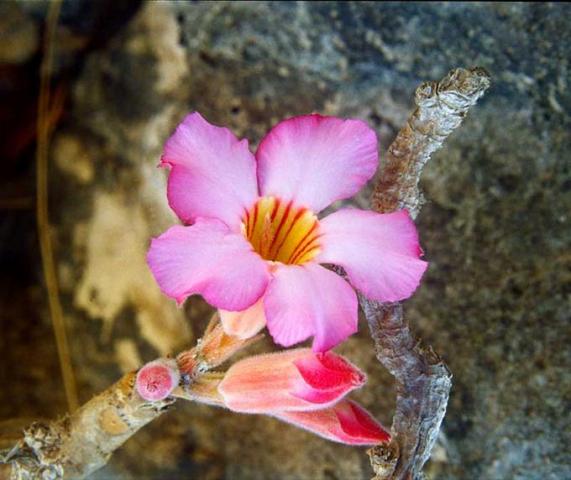
Photo of Oman Desert Rose (OAenium obesum) by Ross Hayden. All rights reserved.

Photo of dead rat by Box Chain. Licensed under Creative Commons. Some rights reserved.

Photo at the World Trade Center on 9/11 by U.S. Navy Photo by Journalist 1st Class Preston Keres. Public domain.

Photo of dojang by Scott Feldstein. Licensed under Creative Commons. Some rights reserved.

Photo of orange blossom by Ellen Levy Finch. Licensed under Creative Commons.

Cedar pencil form Pencil Revolution (one of the coolest pencil blogs on the web!).

Photo of horses from the U.S. Government. Public domain.

Photo of cinnamon toast from Little House in the Suburbs, copyright Deanna Caswell. Her blog post is charming and memorable.

Photo of home fries from The French Fry Diaries.  Some rights reserved.

Photo of night blooming jasmine by Asit K. Ghosh. Licenced under Creative Commons.

Photo of Gorges du Tarn by Benh Lieu Song. Licensed under Creative Commons.

Photo of Circus Circus Hotel Casino by D. Sharon Pruitt. Some rights reserved.

Photo of Scheherazade Arabian Nights by Kay Nielsen. Public domain. More of this artists beautiful images are available for viewing on Artsy Craftsy.