Showing posts with label Enfleurage NYC. Show all posts

Thursday, August 23, 2012

Smell & Tell: Olfactory Writing Workshops


The neon sign at Jimmy John's Gourmet Sandwiches in Ann Arbor, Michigan invites quizzical stares and laughter, but it gets to the point. Nothing seduces appetite like the aroma of food. It doesn't matter if you aren't hungry. The monkey mind will hone in on the smell of food until it finds the source. That is why appetite is one of the Seven Deadly Sins.

Though she realized her fragrant calling in Berkeley, California, perfumer Mandy Aftel attended the University of Michigan and has roots in Ann Arbor. The city has the flavor of Europe, the intellectual horsepower of an Ivy League community and an honest Midwestern spirit that is reflected in hyperactive volunteering and a boundless local food movement as intense as California's (the state of Michigan is the second most agriculturally diverse state in the country). A pattern was forming in my mind as I connected the dots. The idea of olfactory writing workshops began to gestate. It was obvious that Ann Arbor was hip to smell.


Having read the olfactory signs I decided to conduct two "Smell and Tell Olfactory Workshops". One was designed for students at 826Michigan. The other was created for adults who frequent events at the Ann Arbor District Library. Selling the concept of smell is not an easy task, but when you are in a curious college community the barriers are nearly non-existent because those who choose to live here are, for the most part, on a lifelong learning path. When librarian Erin Helmrich* related anosmia stories in our first conversation I knew Ann Arbor wasn't your average college town. Loss of the sense of smell is an invisible disability that is rarely acknowledged.


Both "Smell and Tell" workshops involved smelling a variety of raw materials and writing about the sensations that the aromas evoked. Attendees utilized "smell mapping" as a way to access words that described their experience (a technique I developed to help people translate feelings and memories evoked by the sense of smell into words and phrases). What transpired was unique for each individual as the sense of smell is autobiographical and therefore not subject to judgement regarding what is right or wrong.


Angeline smelled orange, lemon, vanilla, cinnamon, peppermint, and lavender on perfume blotters before selecting an aroma for the writing exercise at the 826Michigan Smell and Tell. What she had to say about lemon is a lesson in olfactory objectivity, something adults have a hard embracing as the years shape likes, dislikes and memories associated with personal preferences. Angeline's favorite smells are lavender, candy and flowers. Her least favorite smells are lemons, paint and wet dog. Interestingly enough, Angeline chose to write about her least favorite fragrance which makes this ten-year-old girl a terrific fragrance evaluator!


The Smell and Tell at the Ann Arbor District Library drew an interesting crowd that included University of Michigan medical researchers, students, artisans, food lovers and some of Glass Petal Smoke's followers on Twitter. From the dais I could see that Sharon was entranced by the raw materials smelled in class, especially Tahitian Vanilla and Rice Paddy Herb (the later was especially true for every member of the workshop as it is a dynamic, multifaceted and synesthesia-invoking scent).

Sharon's eyes were closed for a long time as she smelled a fragrant blotter and she appeared to have been catapulted between a waking state and a dream state. When she opened her eyes her lips parted in a smile. This illustrated story is what she created at the Ann Arbor District Library Smell and Tell. It includes the memory of a chemist who worked as a type of evaluator for a flavor and fragrance company in New Jersey (right click on the picture and save it to read all of the details).


Two more Smell and Tell Workshops are scheduled for the fall of 2012. "Sacred Scents and Aphrodisiacs" will take place at the Ann Arbor District Library on Tuesday, October 30th at 6:30pm. Children at 826MIchigan will experience the thrill of retronasal olfaction when the flavor of bubblegum is dissected in class. The date for this workshop is pending, but Glass Petal Smoke will let you in on a secret; a famous flavorist at Givaudan designed the aromas for this 826Michigan Smell and Tell (she was featured on CBS and in The New Yorker).

Notes:
Glass Petal Smoke is working with Erin Helmrich and the podcasting team at The Ann Arbor District Library to produce programs on the subject of taste and smell. Information will be posted on Glass Petal Smoke and the blog's Twitter page once the schedule is in place.

Kudos to Givaudan who supplied perfumer Yann Vasnier's Le Flacon (a perfume inspired by Baudelaire) and have always supported my educational initiatives. I never asked permission to print the formula for the fragrance in 2008 because it was a radical move to go open source with it; so my gratitude is immense as it won a FiFi nomination and Givaudan embraced it with open arms. Kate Greene, you are truly a gem!

Special thanks go out to Dream Air (Christophe Laudamiel and Christoph Hornetz) and their supplier Firmenich for providing the scents for the Ann Arbor District Library Smell and Tell. Msr. Laudamiel always answers my perfume history/chemistry questions in beautiful detail and I am most thankful for our professional friendship.

Additional thanks to Laurie Harrsen of the McCormick Corporation who supplied the flavor extracts used at the 826Michigan Smell and Tell. Your flavors led to the students requesting a more "food-oriented" class which I plan on delivering in the fall. Rhodia pencils were supplied by Karen Doherty of Exaclair and turned the experience of writing into a multisensory adventure. Copies of The Name of this Book is Secret, by Pseudonymous Bosch were generous donated by Lisa Moraleda at Little Brown Books for Young Readers, for which the children were most grateful.

Olfactory curriculum helps children connect their feelings to their thoughts, and teaches them to trust the invisible and seek out story in smell. When a child learns how to make something tangible out of an abstract sense like smell they become "makers" of things. Makers of things learn to develop intuition and are less likely to be passive in life and learning. This is the diamond in olfactory curriculum and was the catalyst for the creation of the Smell and Tell workshop for 8-10 year olds that premiered at 826Michigan in Ann Arbor on June 6, 2012. It is also something that resonated with Maria Montessori‘s approach to sensorial education.

826Michigan is one of eight satellite tutoring centers connected to 826National. The centers are designed to help children develop expository writing skills. 826National was founded by award-winning author Dave Eggers and educator Nínive Calegari (they started the first chapter,  826Valencia in San Francisco). Each outpost offers free tutoring which is camouflaged by a storefront with a particular theme. The storefront takes the stigma out of receiving tutoring and generates revenue that goes back into overhead expenses. Glass Petal Smoke recommends visiting the various online storefronts for holiday shopping as proceeds are directed to a terrific cause.

Laura Rose Vlahovich was born without a sense of smell, a condition known as congenital anosmia. She is a talented artist and designed the graphic of the aromas used in the children's Smell and Tell at 826Michigan. Check out Thrift Score, Ms. Vlahovich's Esty shop, for cleverly curated vintage housewares and home decor.

Mandy Aftel single-handedly catapulted the artisan perfumery trend with her book, Essence and Alchemy: A Natural History of Perfume. Aftel is currently working on her second book. Some of her food-grade essential oils (in the pantries of many famous chefs) are available at William Sonoma. The full line of "Chef's Essences" is available at the Aftelier Perfumes website. Mixologists are not strangers to these delightful ingredients, as evidenced in a recent New York Times article.

Rice Paddy Herb is available at Enfleurage. It is a "bucket list" aroma that should be experienced more than once in a lifetime. It evaporates in a brilliant flash of freshness that is sunny, verdant, ozonic and earthy; like standing on a dew-dappled grassy mountain under a blue sky on a perfect summer day. Rice Paddy Herb possesses an addictive cuminesque element minus the funk that reminds cumin haters of body odor. It smells fresh in both senses of the word which is, perhaps, its subconscious power.

Jimmy John's apparel offerings include men's boxer shorts with their "Free Smells" tagline. Smellculturists may infer/gift as they wish. [This product is no longer offered.]

The "Olfactory" graphic was designed by Jennifer Orkin Lewis and is used with permission. Rights revert back to the artist.

Photos of student work and associated images used with permission. Rights revert back to the image holders.

Friday, April 1, 2011

Inside the Olfactory Mind of Trygve Harris


Trygve Harris is the owner of Enfleurage, a haven for natural perfumers and fragrance enthusiasts. The store specializes in essential oils, frankincense, agarwood (oudh) and aromatic materials from around the world. Ms. Harris divides her time between New York City and a home in Salalah, Oman. She travels frequently, visiting suppliers in locations where ingredients are cultivated, harvested and distilled.

1.  What does your sense of smell mean to you?
It means so much that I don’t really think about it. It’s a way of perceiving the world and adds dimension, texture, resonance and meaning in the same way that sound and vision do. It’s part of the tapestry of perception. If I try to imagine existing without my sense of smell, the world would appear flat, colorless, uninspired and not at all interesting. It would be like television which doesn’t engage me at all. Without a sense of smell I imagine life to be more watched than lived.

2.  What are some of your strongest scent memories?


The best one is that smell you get in the San Fernando Valley in the late afternoon and early evening, with the sprinklers on everywhere and the water evaporating on the driveways. I just love that and I rarely get to smell it now. It even had a little audio soundtrack; the tick-tick-tick of the sprinklers.


Gasoline, of course, and junkyards! I loved those. There were a bunch of really cool giant junkyards in southern Los Angeles County that we’d drive past whenever we went somewhere, with crushed cars by the hundreds. You could smell the fierceness and violence of all those destroyed automobiles and there was an undertone of oil refinery that accompanied it. I can’t remember where the refinery was except that it was near the junkyards.

When I was very young we had a house in Palm Springs, in the Movie Colony, where we would go on weekends. The way it smelled when we arrived was unforgettable: the dry crisp desert air, the oleanders, the baked clay and stone outside, the breath-holding expectation and stuffiness of the house, the way the shag carpet and rice paper doors were impregnated with something of the recesses of earth, the huge beetles that swarmed out of the drains when you opened the taps, and the metallic smell of the water. All of these sensations combined could be described as the smell of the California desert.


When I was growing up my mother wore Chanel N°5 but that’s strange for me because what I see today on the duty free shelf is not the Chanel N°5 I remember. My father always wore wonderful cologne but I have no idea what it was named. I also recall the smell of cigarettes because both of my parents smoked Camel® non-filters. There are some cooking smells: sopa de fideo, marinara sauce, Bertolli® olive oil, garlic and tomatoes.


Oh, and brush fires. It must have been 1968 or so and the whole San Fernando Valley was burning. It was the Chatsworth Fire. There was so much smoke it was hard to breathe and you could see flames in every direction tearing up the hills. You could hear the roar and smell chaparral, eucalyptus, sage and whole hills erupting. Then there’s Agree® shampoo. The first guy I lost my mind over used it. That formula is being used by another company today, and I don’t know which company or what it’s used in, but it’s sold in Salalah. Occasionally I get a whiff and nearly give myself whiplash. 

3.  What are some of your favorite smells (things in nature, cooking &/or your environment)?

Mysore sandalwood has no peer in this world; glorious. My house! I love the way my house smells! I burn a lot of a bakhoor, Oudh Mubakhar from Ajmal, as well as agarwood (oudh) and frankincense; that’s an ever-present undertone that has seeped into the porous material of my house. I really love the smells of the structure itself, particularly of my home in Salalah. I can’t tell you what it is exactly, other than the way my house smells and I don’t want to know, actually. It might be something I’m better off not knowing.

I love the way fires smell in the fall. Even in Salalah, which really has no fall, you can still smell these lovely wood fires. I love flowers, of course: acacia, jasmine, tuberose, quisqualis, citrus blossoms and roses (those crazy powdery red ones in Salalah). While I love the smells of the tropics in general, wet and heavily loaded, I am excited and thrilled by drier places: clean desert air and sand, sagebrush and chaparral, wild mountain herbs and valleys, the Santa Ana winds, the Salalah winter wind. I also love how it smells when someone I love is cooking for me; never mind what they’re cooking. A large part of what I love is how an intention smells. There’s also the impression that smells make. The sea smells like calm. (I love the smell of the sea and am partial to the Pacific and Indian Ocean.) Then there is the smell of home; home smells like everything’s going to be all right.

4.  Do you have any favorite smells that are considered strange?

I like the smell of gasoline and used to think that was strange, but many people like it. I like the smell of the steam that comes out of manhole covers in New York City. It’s stronger in the summer, and it probably smells like crap, but I love it. I also like the way the Doha Airport smells. Many people would consider my love of oudh strange. Let’s face it: its animal, sex, shit and a whole host of unnamed emotions right up in your face. I assume that most people hate it, unless they're aroma geeks or Arabs. That's the big bonus of living in the Middle East—everyone loves oudh.

5.  Describe one or more of your favorite cooking smells.

Vanilla! Although I am not a baker, it’s exciting for me to smell it; it’s warm and cozy yet has some kind of erotic promise. It has a kind of central bloom and generates a living heat. It’s soft and very nurturing. There is much I don’t understand about vanilla and I am ready to find out more about it. Coffee, of course, a smell so intractable that a day without it beckons cold, gray and bleak. I can remember all the days of my life when coffee did not materialize.

6.  What smells do you most dislike?

It’s a horrible thing to think about! Decay is what I most dislike. Between 1996 and 1997 my old Jones Street store in New York City was situated in a building with a terrible rat problem. Even though the store was sealed and we didn’t get rats inside, they died everywhere: in the hallways, in the basement, in front of the store, on the steps—everywhere. The superintendent didn’t clean up the mess until the carcasses were in an advanced state of decay. As a result, I am better versed in death smells than I want to be. I can tell how long rats have been dead and how the smell changes when they start to liquefy in the summer heat. I used to patrol the outside of the store with a super-sized spray bottle of water and peppermint oil, and ambush the (living) rats with it. I am hyper-attuned to death smells and will catch the tiniest whiff of them as I walk through any city and am usually the first (and sometimes only one) to notice them. Fermenting garbage, like the kind you find in New York or Mumbai, has this decay smell too.

I also dislike the smell of processed food like McDonald’s®. Getting into the elevator with someone who has a bag of that makes me gag; it’s hideous. Processed cheese, old frying oil, margarine, there are bunch of chemicals that go into corporate food and if you can’t smell them as you’re eating them, you can sure smell them coming out of your pores later. When I was a kid I loved McDonald’s® and Doritos® and all that stuff as much as the next kid, but I think that my body just rebelled on an organic level. Processed food doesn’t smell like food, it smells ugly. It smells like chaos.


The way the World Trade Center smelled as it burned was horrible: unknowable plastics, molten steel and barbecued flesh. There was an acridity that wove in and out of the already hideous mix of melting things you were never supposed to smell burning, and then the burnt flesh poked through every so often, making its point again and again. The visuals went along with it; little green fires, melted building faces, a shower of unknown lethal flakes—everything.

7.  What smell did you first dislike, but learned to love?

It was the smell of my dojang. When I first started martial arts I can’t say that I hated the smell of my school, but it was a little strong. It smelled like a gym; something I despise the smell of. It quickly became a smell of home, escape and serenity. Even the locker room was wonderful, although it was rarely cleaned and the showers were moldy and some people just left their uniforms there for weeks. When I entered that front door it was like sinking into a bed of bliss. Objectively speaking, I knew from the reaction of my friends (who I would force to come and visit) that the smell there never actually improved.

8.  What mundane smells inspire you?

 
Cedar as in cedar pencils; there’s a quick flash of wanting to start something fresh. The aroma of coffee inspires me too, though there is nothing mundane about that smell. Citrus blossoms awaken my senses, but they don’t motivate me in the direction of starting a project or working, they affect me in a more languid and sensual way.

9.  What scent never fails to take you back in time and why?


I love the way horses smell. Even though I grew up in Los Angeles and Santa Barbara, both of those neighborhoods had horses. I had my own horse for some time when I was 10 or so. I always think of him and the time we spent ambling in the foothills whenever I smell horses. We were both babies then so our relationship was rather stormy, but we lived though it and enjoyed our times together, at least I know I did.

10.  What scents do you associate with memories of loved ones?

That’s interesting to think about. I started out digging through my familial past, but that’s not the only place to find memories of loved ones. I’ll take “loved ones” in another sense. Everyone has their own scent, as we all know. Even though I think many, if not most people are driven by this, my entire love life has been run by my sense of smell. It’s not only chemistry. I have known a few men whose smell was enough to make me behave in ways I still can’t believe. So, if I get a whiff of something like that smell, something similar, then it’s like a whole china cabinet has crashed on my head.

Those smells are beyond explanation. They are the ones you just react to, the ones that make your hair stand on end, and get your heart racing and your blood rushing like thunder. Those are the smells you can’t even talk about, but they are terrifying and addictive and delicious and you can take a bath in them. Smells like this feel like plugging yourself into a live socket. When they disappear from your life it’s like someone has taken away your bones; you have nothing to stand with, no support and are missing something integral.

11.  What fragrance(s) remind you of growing up?

A whole stream of things; chlorine, swimming pools in the sun, water splashing out on the hot pavement, Camel® cigarette smoke, instant coffee, fried potatoes in the morning, gasoline, my mother’s skin, cut grass, Primo® Incense, davana flower, lotus flower, Indian perfume oils you find in head shops, pot, cinnamon toast and Chanel N°5 from Paris.

12.  What fragrance(s) remind you of the places you visited on vacation?
The scent of pikake and tuberose flowers, night blooming jasmine, the Pacific Ocean, and humid Hawaiian breezes with indecipherable sweet floral aromas racing through them are all reminiscent of vacation. My family visited Hawaii a few times when I was a kid. Later, I went to school on the Big Island for a short time. That’s where these olfactory memories come from.


My father’s best friend was a French sports writer and we visited him at his farmhouse in Moissac, in the south of France. The hotel where we stayed (an old mill) made excellent croissants and hot chocolate in the mornings. The dry fields of late summer, ripe plums and roasting lamb. Everything was so fresh, so tempting, so sensual and so heady: the landscape, the roasting lamb, the salads, the olives and the vinegar; the smells wafting through the farmhouse “Fabel,” the smell of the river Tarn which ran past the hotel—all of it.

We went to Las Vegas quite a bit as my father worked there often. Remember, these were the days when Las Vegas was not a “family” or “shopping” destination. In the late 60’s and 70’s it was still a gambling and entertainment destination for adults. We weren’t even allowed in the casinos except to pass though. It was the Circus Circus for us! I remember the smell of stale cigarettes, coins and spilled drinks in the casinos. In fact, the casino cocktail of smells is actually one of my favorites. It smells like a mixture of anticipation, hope and disappointment for sure. It’s so intense! The blip-blop-ping of sirens and bells and the little flashing lights added a great sub-soundtrack to the experience.

13.  Describe a piece of sensory literature that is very magical for you.

That would have to be Thousand Nights and One Night. In 1989 I bought the 4-volume set of the Mardrus and Mathers translation in Cairo. It’s the only book of its kind I’ve ever come across. I suspect that has a lot to do with my attraction to the Middle East. You would not believe the utter delicious decadence and lascivious sensuality, a complete merging of sexual delights, exquisite perfumes, delicious foods, labyrinthine deceit, Byzantine plotting, true love, thrilling adventures—and it  never lets up! Each story is a sumptuous feast that excites and delights every desire you never knew you had. These are not the pale and simple versions of Scheherazade, Sinbad, Aladdin, Harun al-Rashid and Ali Baba we are familiar with; they are huge and brilliant. It is totally worth seeking out.

Notes:
Enfleurage is located at 237 West 13th Street,  New York, New York 10011. To call the store phone: 212-691-1610 / 888-387-0300. Enfleurage is open from 12-8, Monday thru Saturday and 12-6 on Sunday.

Fans of Agree® Shampoo had a Facebook page titled "Remembering Agree® Shampoo from the 1980's: We Want it Back!"  Its not uncommon to find this kind of passion when it comes to the sense of smell.

Photo Credits:
Photo of Trygve Harris and a marigold wallah among the flowers. Rights reserved by Trygve Harris. Used with permission.

Photo of crushed cars by Chris Jordan. Licensed under Creative Commons. Some rights reserved. Please visit his website; the images are powerful.

Photo of white oleander bud by Joaquim Alves Gaspar. Licensed under Creative Commons.

Photo of Audrey Tatou asleep in a train car with the shadow of Chanel N°5 on the wall by Chanel.

Photo of brush fire from the Los Angeles Fire Department's Brush Clearance Unit.  

Photo of Moroccan incense bowl by Michelle Krell Kydd. All rights reserved.

Photo of coffee beans by Mark Sweep. Public Domain. Creative Commons.

Photo of steaming manhole cover by Lisa Lubin. Licensed under Creative Commons. Some rights reserved.

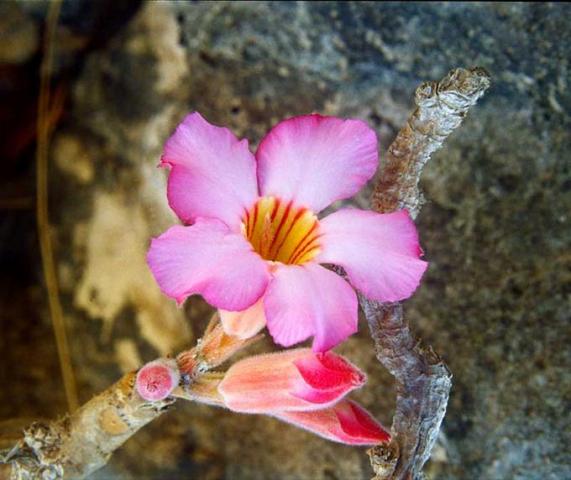
Photo of Oman Desert Rose (OAenium obesum) by Ross Hayden. All rights reserved.

Photo of dead rat by Box Chain. Licensed under Creative Commons. Some rights reserved.

Photo at the World Trade Center on 9/11 by U.S. Navy Photo by Journalist 1st Class Preston Keres. Public domain.

Photo of dojang by Scott Feldstein. Licensed under Creative Commons. Some rights reserved.

Photo of orange blossom by Ellen Levy Finch. Licensed under Creative Commons.

Cedar pencil form Pencil Revolution (one of the coolest pencil blogs on the web!).

Photo of horses from the U.S. Government. Public domain.

Photo of cinnamon toast from Little House in the Suburbs, copyright Deanna Caswell. Her blog post is charming and memorable.

Photo of home fries from The French Fry Diaries.  Some rights reserved.

Photo of night blooming jasmine by Asit K. Ghosh. Licenced under Creative Commons.

Photo of Gorges du Tarn by Benh Lieu Song. Licensed under Creative Commons.

Photo of Circus Circus Hotel Casino by D. Sharon Pruitt. Some rights reserved.

Photo of Scheherazade Arabian Nights by Kay Nielsen. Public domain. More of this artists beautiful images are available for viewing on Artsy Craftsy.

Friday, September 5, 2008

Fragrant Explorations: The Scent of Gardenia

The seed of an explorer lies dormant inside everyone. When carefully nurtured through travel, it blossoms and reveals this truth; the boundary between the senses and sensory objects is an illusion. We assimilate everything that we encounter in life and this shapes who we become. 

Travel is a catalyst for self-discovery and those willing to go where others have not sometimes bring the journey to others. This is reflected in the travels of Trygve Harris, owner of the fragrance shop Enfleurage in New York. Harris uses her love of scent as a compass for self-discovery that is passed on to her customers. The result of her recent quest is true gardenia essential oil and gardenia butter from Columbia, each an exquisite find in its own right. 

True gardenia essential oil is rarely used in commercial perfumery. It is expensive to produce and yields a kilo of absolute from 5000 kilos of flowers. In Perfume and Flavor Materials of Natural Origin author Steffen Arctander notes that French extraction expert Charles Garnier made gardenia concrete on the Indian Ocean Island of La Réunion, but eventually gave up the venture. 

Gardenias are native to southern Asia so it was no surprise when China and Formosa entered the market and began producing gardenia concrete from Gardenia florida, the same genus and species used in traditional Chinese medicine. (The berries of another variety of gardenia, Gardenia grandiflora, are used by the Chinese to produce a yellow dye called wong shi). When Arctander sampled gardenia concrete from China and Formosa he deemed them weak and unimpressive; an assessment that preceded the publication of his book in 1961. 

Modern perfumery relies on a mixture of natural and synthetic molecules to produce long lasting effects in finished fragrance products. In the industry, this quality is referred to as "tenacity". Robert Piguet's Fracas (1948) is a good example of this; middle notes of tuberose and gardenia can still be experienced in the perfume's powdery and musky drydown. When a person’s reference point is a finished product versus the raw material itself, it's hard to ferret out a single odor profile by smell. This is a serious issue for the true fragrance connoisseur who wants to feel connected to the source of their olfactive pleasure, as well as the history of that source. 

A similar sentiment is embraced by the Slow Food movement whose members emphasize the need to connect to the source of food on a local level. In an article in Food Arts entitled “Massing Links”, author Paul Hawken articulates opinions that shadow those expressed by fragrance connoisseurs;  
One of the drivers of the food system is the loss of nutritional literacy. We cannot taste the things we once did and do not recognize the importance of taste. And since taste drives consumption and purchasing, it’s critical to what we grow and how we produce our food. Our nutritional literacy can be reduced to a few intense flavors: salty, sweet, fat. Yum. It’s called McDonald’s and Fritos and Cocoa Puffs. Manufacturers know far more than we do about olfactory responses and mouthfeel and how these affect the brain and our sense of well-being. These taste buds in our mouth are not baubles to be toyed with. They are evolution itself, a teacher, a kindness, a guide. Because the natural food stores have been taken over by Whole Foods, it’s left to restaurants to curate the wisdom of our taste buds and remind us of what we have lost.                                                        —Weintraub, Judith. “Massing Links.” Food Arts June 2008: 109-113. 
Trygve Harris blogs on Absolute Trygve and her profile includes this revelatory quote; “I own a small company in New York City specializing in aromatics from the natural world. I was very excited to learn that nearly everything I had ever learned about everything, including myself, was wrong and continue to be surprised and delighted by this discovery daily.” I have never met Trygve Harris, but shop at Enfleurage regularly, eager to catch a whiff of her latest find or satisfy an exotic yen. (Enfleurage is not far from Aedes de Venustas and Aphrodisia Herb Shoppe, so it would be sacrilegious not to include the store when scentripping in the West Village). Based on her personal ethos, it would be safe to say that Harris would sooner sample gardenia concrete herself as opposed to allowing Arctander's sacrosanct evaluations to set a limit on her curiosity; which is exactly what she did. 

Harris visited an organic farm in Columbia that makes essential oils using the enfleurage method and was present for the extraction of gardenia. Enfleurage is a method of fragrance extraction that involves layering petals or whole flowers in fat and separating the plant’s scent compounds from the infused pomade using a solvent (usually alcohol). The process is one of the oldest means of extraction used in perfumery, one that does not degrade the fragrance through excessive heat. The process is laborious and not as efficient as modern methods that utilize organic solvents or liquefied gases. This is evident in the tenacity of organic gardenia extract that has been produced for the Enfleurage shop; it is beautiful, but lacks the complexity of a conventionally extracted fragrance material. 

The gardenia butter is a sensorial gem. It's a luxurious pomade enriched with particles of perfumed palm fat that come out of the alcohol distillation process used to extract gardenia. As expectations of tenacity are not at the forefront for this product, it can be enjoyed for its sensual texture, moisturizing properties and delicate fragrance. The creamy green facets of gardenia rise above its fruity floral character, a quality that is also found in tuberose. The result is a product that resembles the scent of gardenia in its natural setting. It is initially impactful, leaving little to linger over when the nose draws away.

Does gardenia butter's short-lived tenacity matter? If you are a consumer that's only been exposed to commercially prepared perfumes, the answer is “yes”. The average fragrance user's expectations are framed by the marketplace and most fragrance consumers have little exposure to raw materials used in perfumery. If consumers are fortunate enough to live in climates that support the growth of plants and flowers used in perfumery, familiarity will be established with regard to how these raw materials smell in their natural setting. All travel, by foot or across an ocean, exposes the senses to new experiences. The fact that Trygve Harris's explorations echo the sentiments of Paul Hawkins is not a coincidence. Terroir extends beyond the gustative and into the olfactive, an important fact to remember when navigating among sensory menageries. Where will the explorer's compass take you? 

Notes: Enfleurage's gardenia butter and essential oil are in limited supply. A quarter ounce of the butter is $15. A 2 ml bottle of the essential oil is $50.00. The store is located at 321 Bleecker Street in NYC. Phone: (212) 691-1610 or (888) 387-0300. The purview of perfumery has widened since Steffen Arctander’s book on natural materials was made available to the public (it is part of a set and only recently became available as a standalone). 

The first picture that accompanies this post is from a work entitled "Seed Fire". The third picture is called "Heart Offering". Both were created by artist Krista Lynn Brown. Her artwork can be found on Devaluna. Photo of a magnolia flower is taken by brianrosshaslam on Flickr. "Red Flower, Old Compass" is a thoughtful photo by claireikalena on Flickr.