Showing posts with label Recipe. Show all posts

Monday, March 7, 2022

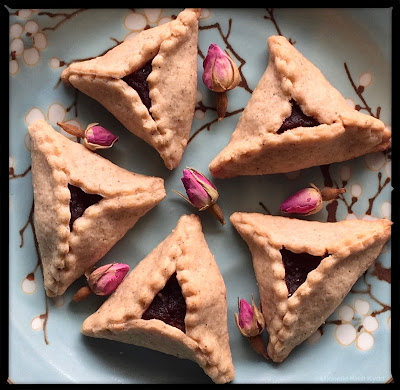
Baking with Flavor: Spiced Rose Hamantaschen

Bronx bakeries of my youth sold large, unruly hamantaschen. Eating them was a war between front teeth and a solid wall of dry cookie dough that cracked and crumbled with every bite. Elastic textures of apricot, prune and poppy seed filling offered little reward for the effort it took to get to the center of the triangular-shaped pastry. Taking a bite out of the holiday cookie eaten on Purim symbolizes victory over Haman in the Book of Esther. The only thing my friends and I tasted when we ate bakery hamantaschen was irony.

No one should sacrifice teeth or good taste for the sake of eating hamantaschen. Buying one from a bakery is still a gamble to which the offense of preposterous fillings and decorations can be added. What can a person who craves descent tasting hamantaschen do?  

The solution is making butter-based hamantaschen from scratch. Butter supports a light flakey texture in the pastry. Shortening and excess sugar are key offenders in bad bakery hamantaschen (they're responsible for hard textures in pastry that taste of nothingness). Does the thought of tender-at-the-bite hamantaschen make your mouth water and whisking wrist tremble? Just wait until you work the aromatic dough with your hands when you make Spiced Rose Hamantaschen (it's a textural hybrid of piecrust and shortbread).
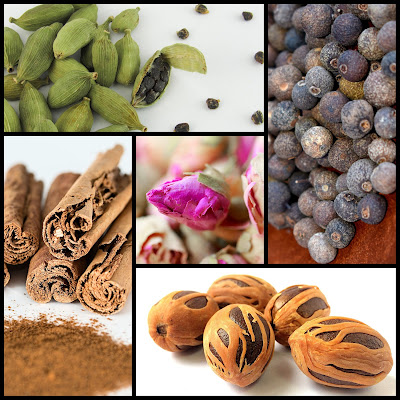

Hamantaschen dough deserves more attention as a flavor source versus a neutral foundation for pastry filling. Citrus zest and vanilla are used to flavor the dough in traditional hamantaschen. Quality fruit fillings are hard to come by, so it's not uncommon for bakers to make their own by cooking dried plums (prunes) or apricots with sugar and water. The finished product is a concentrated fruit butter called lekvar. The balance of citrus zest and vanilla used in the dough complements the flavor profile of tart stone fruits. 

The recipe for Spiced Rose Hamantaschen follows the style of complementary flavor support in traditional hamantaschen—with a twist. Cinnamon, dried rosebuds, allspice, nutmeg and cardamom (Pereg Mixed Spices for Koobah) are added to the dry ingredients in the recipe. Almond extract and Eden Botanicals Organic Rose Hydrosol (a food grade distillate of essential oil of rose) are whisked into the egg mixture. The unique combination of flavors in the dough is a nod to Mizrahi and Sephardic baking traditions. 
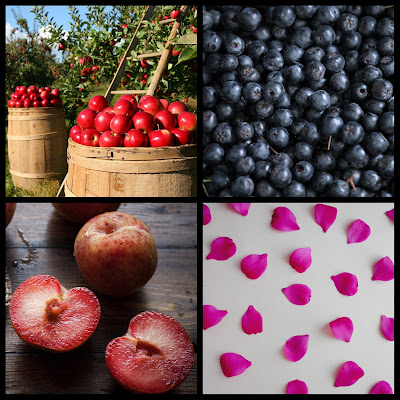


Rose isn't an outlier when it comes to flavor. Like apricot, plum and other stone fruits, the rose is a member of the Rosa genus of plants in the family of Rosacea. Edible seed-bearing fruit from various rose species are called rose hips. They have a tart, fruity flavor profile versus fresh rose petals, which taste like roses smell. Dried pink rose petals have a bright spicy floral character with nuances of delicate citrus. Dried red rose petals have an earthy-musky, fruity-floral flavor profile with a touch of warm spice. 

Cracovia Rose Hip Lekvar is an exquisite filling used in Spiced Rose Hamantaschen. The imported Polish lekvar is a popular filling for paczki (donuts) and kolaczki (cookies), which is why it's easy to find at local Polish food shops across the country. The ingredient list includes: apples, plums, chokeberries and rose flavor (the latter possesses an exquisite citrus-floral quality that's similar to the character of rose aroma in Eden Botanicals Organic Rose Hydrosol, which is made from pink Rosa damascena flowers). 
Recipe Origin & Adaptation for Spiced Rose Hamantaschen

Spiced Rose Hamantaschen is an adaptation of a hamantaschen recipe in Maida Heatter's Cookies (Andrews McMeel Publishing, 1997). I've changed the flavor structure and edited the instructions. Anyone using this recipe may increase the number of cookies by using a 2.75 inch pastry cutter (48 cookies give or take). The single jar of rose hip lekvar will work for both cookie yields as long as the filling is leveled before being placed on the dough rounds (you won't need more because it's packed with flavor).

The baking temperature is reduced from 400 degrees to 375 degrees for optimal pastry texture (you can always increase time based on oven temperament or bake at 400 degrees). Forming hamantaschen on parchment-lined cookie trays after cutting rounds on a pastry mat replaces instructions to form pastry in hand (the latter doesn't work). Using all-purpose flour with too much protein will cause the dough to fall apart when you form hamantaschen and it can't be remedied. Guidance regarding flour protein content is included below the ingredients list. A mixer isn't needed for this recipe.

Spiced Rose Hamantaschen
Recipe by Maida Heatter
Flavor Development/Instruction Modification by Michelle Krell Kydd
Yield: 27 cookies

Ingredients 
*Be sure to use unbleached all-purpose flour that contains 3g of protein per 1/4 cup serving of flour. Some all-purpose flours have upwards of 3g of protein per serving, and hamantaschen pastry dough will not hold together at high levels of protein. Read the nutrition label on the bag of flour to ensure baking success.

Instructions 
  • Sift the flour, baking powder, salt, sugar and Koobah spice into a large mixing bowl. 
  • In a small bowl, beat the egg with almond extract and rosewater. Set aside.
  • Cut the stick of butter into small cubes by cutting horizontally, then vertically. Add cubed butter to the dry ingredients and coat them. Press the cubed pieces of butter flat to form petals. Combine the butter petals with the dry ingredients until the mixture resembles coarse crumbs. 
  • Make a well in the center of the bowl with the dry ingredients and add the wet ingredients. Mix the dough with your hands until it is completely moistened. Gently work it in the bowl and form a single mound of dough that holds together well (it will feel less cohesive than typical cookie dough, which changes after refrigeration). 
  • Separate the single mound into two mounds of equal weight. Wrap each one in plastic wrap and place them side by side in a gallon-sized plastic bag with a zip seal. Refrigerate the dough overnight for a minimum of six hours to a maximum of 18 hours (longer is better for flavor).
  • Line two cookie trays with parchment paper when the dough is ready to use. Set aside.
  • Work with one half of a mound of refrigerated dough at a time, keeping the other half refrigerated. 
  • Roll the dough into an even 1/8-inch thickness on a pastry mat, working quickly as the dough tends to be sticky (short quick rolling helps). 
  • Cut the dough into rounds with a plain or scalloped 3-inch cookie cutter. You’ll fill the dough and shape it after you cut 7 rounds. (Each half a pastry mound yields approximately 7 cookies). 
  • Move the rounds to a parchment-lined cookie sheet using a long confection spatula (a small, flat silicone cookie spatula will also work as it's flexible). 
  • Scoop a teaspoon of the filling using a one-teaspoon measuring spoon, removing the excess filling from the bottom of the measuring spoon (a form of leveling) and adding the excess filling back into the jar. 
  • Place the leveled filling into the center of each round using an additional spoon to scoop it out.
  • Make a triangle shape by folding up two sides of the dough (each side is equivalent to a third of the circle) and pinch the corners together where they meet. 
  • Fold up the third side and pinch together at both sides, forming a triangle and leaving an opening at the top (don't close the center). The filling should be just above the top of the pastry. 
  • Continue rolling, cutting, filling and shaping the dough rounds until you've finished using all of the refrigerated dough.
  • Adjust the arrangement of hamantaschen so that each one is 1 1/2 inches apart (1 inch for cookies made with a 2 3/4 inch pastry cutter) when you're done. Take advantage of the geometry of the cookie, as triangular shapes can be placed at different angles without touching while baking.
  • Divide the oven racks into thirds and preheat the oven to 375 degrees. 
  • Bake for 12 minutes, reversing sheets from top to bottom and back to front after the first 6 minutes. The cookies should be barely colored on the sides, slightly darker on the edges. Add 1-2 minutes if needed, based on the temperament of your oven.
  • Move the baked hamantaschen to cooling racks and allow them to them cool completely. Store them in an airtight container between layers of parchment paper for 24 hours before eating. The resting period allows the flavors to meld. 
Creating memorable flavor combinations requires patience and imagination. You never know what can happen when you find an ingredient that inspires you. Case in point. Food writer Heather Eddy fell in love with the lemon-vanilla-orange blossom bouquet in Fiori di Sicilia. She liked it so much she decided to wear the flavor extract as perfume because it's made of food grade essential oils. If this rings your hamantaschen bell here's a little inspiration for you. Fiori di Sicilia is an olfactory cousin of Eau de Cologne. Imagine what Fiori di Sicilia infused hamantaschen dough filled with bergamot marmalade or lemon curd would taste like. 

Notes & Musings
Pereg Mixed Spices for Koobah is available online at Pereg Gourmet ($8.60 for 3.5 oz). The spice mix can be used in savory and sweet applications. If you'd like to substitute a variation of the spice blend that you can make at home, follow the proportions in the ingredient listing for Koobah located in the fifth paragraph of this post. Be sure to use Ceylon cinnamon as that is the type used in the spice mix. Organic pink rosebuds can be purchased from online spice shops. You'll have to separate the petals from the stem at the base, which is a lovely thing to do. 

Eden Botanicals Organic Rose Hydrosol is available online at Eden Botanicals. The recommended purchase size is 4 ounces ($14.00) as it needs to be refrigerated after opening. Rose hydrosol can be used to flavor coffee, tea or hot chocolate. (It also makes a great face toner and is lovely when sprayed on bed sheets before going to sleep, so go up a size if it's something that appeals to you.) 

Cracovia Rose Hip Lekvar is available online at the Polish Art Center in Hamtramck, Michigan. It's fresh and competitively priced ($3.80 for a 12.34 oz jar). Note to sharp-eyed readers of ingredient labels: rose hips aren't listed on the jar of Polish rose hip lekvar. This is permitted by European Union regulations when the amount of a specific fruit in a mixed fruit jam is under 2%.  

Jam is thinner than preserves, and has a tendency to leak out of the hamantaschen pastry while it's baking. If you choose preserves for your hamantaschen recipe make sure that pectin is included in the ingredient list (it’s a natural fruit-based gelling agent).

The best rose preserves are made with sugar, rose petals, lemon juice and pectin, but they lack the thickness required for hamantaschen filling (they'll weep in the oven). If you're a determined experimenter, hack a jar of Maharishi Ayurveda brand Organic Rose Petal Spread and turn it into lekvar with other ingredients.

Photo of Spiced Rose Hamantaschen on a plate by Michelle Krell Kydd. All rights reserved. Ingredient image collages created with various Creative Commons photos from Pixabay. Image of person pouring flour on a table by Mae Mu on Unsplash.

Monday, February 1, 2021

Love Potion No. 99: An Aphrodisiac Elixir for the Senses

Love potion. The very notion tastes like alchemy, dry ice and witchery. The concept of food as a talisman isn't new, but when it's attached to love there seems to be an unending string of incarnations.    

Every act of coupling has a unique quality and whether or not it is intended, the potential for creating new life is written into the physical expression of affection. In that tide of energy, identities are exchanged, traded and temporarily obliterated. 

Each person emerges slightly different, yet more themselves than they were before. How could one not try to pierce that mystery by engaging the sense of taste?

Say the phrase “love potion” to Chef Susan Baldassano and she recollects her days at Angelica Kitchen, where the staff and the patrons partook of a mysterious brew called Love Potion No. 99. 

The name pays tribute to aphrodisiac elixirs and brews with flavors shaped by warm spices, as well as fruits, herbs and spices with hints of aldehydic qualities. 

It isn't difficult to imagine perfumer Ernest Beaux taking a break from playing with aldehyde molecules while formulating Chanel No. 5, and partaking of Love Potion No. 99 when he was off the lab bench. 

The intention of the elixir has nothing to do with the scent of freshly scrubbed skin that inspired Chanel No. 5. It's a complementary contrast, which is as it should be. 

Ingredients
  • 6 cups apple or pomegranate juice 
  • 2 cups water 2 tablespoons sugar/honey 
  • 1 oz. (30g) rose petals (food grade) or 1-2 tsp rosewater 
  • 1 stick Ceylon cinnamon (Cinnamomum vera)
  • ¼ oz. (7g) lavender blossoms (food grade) 
  • ¼ oz. (7g) whole nutmeg 
  • ¼ oz. (7g) whole Ceylon cloves  
  • ¼ oz. (7g) candied ginger 
Optional additions (highly recommended): 
  • 2 whole star anise 
  • ¼ tsp. orange peel 
  • ¼ vanilla bean or 1 tsp vanilla extract 
Instructions:
  • Simmer juice, water and sweetener. Do not boil as this will produce cloudiness. 
  • Put all herbs and spices in a cheesecloth and steep for seven minutes. 
  • Remove from heat. 
  • Strain liquid from the cheesecloth to extract the flavors. 
  • Serve warm or refrigerate. 
Notes: 
Chef Susan Baldassano, a graduate of the New York Institute for Culinary Education, has been a cooking instructor for over 30 years. She also served as Director of Education at the Natural Gourmet Institute for Health and Culinary Arts, in New York City. 

Chanel No. 5 is famous for its sparkling aldehydic qualities. If you're a Chanel No. 5 fan you'll want to read these popular posts on Glass Petal Smoke:  Why Chanel No. 5 Smells like Babies, Perfume Memories: Chanel No. 5, and Smell & Tell Lectures: Three Years and Counting (2015) (this article includes a video presentation of a beloved Smell & Tell titled Chanel No. 5: The Art and Science of a Timeless Perfume)

Painting of Odalisque with an Orange by Angélique Bègue (2014).

Tuesday, May 12, 2020

Baking with Flavor: Persian Orange Blossom Cookies


Persian Orange Blossom Cookies are one of Glass Petal Smoke's signature cookies. Food grade essential oil of neroli and orange zest infuse the pastry, which is accented by a flourish of apricot jam and a smattering of pistachio nuts. The result is an intoxicating pastry that delights the senses before, during and after baking.

The pastry base for Persian Orange Blossom Cookies is modeled after classic thumbprint cookies, but the flavor is decidedly Middle Eastern (and Italian by Moorish influence). You'll be dreaming up fragrant combinations of your own after you taste them. Go forth, be bold and bake with flavor!

Persian Orange Blossom Cookies
Recipe by Michelle Krell Kydd 
Yield:  2 1/2 dozen cookies

Ingredients:
• 2 cups all-purpose flour
• 1 cup sweet unsalted butter, softened*
• 1/3 cup granulated sugar
• 2 eggs, separated
• 1/4 teaspoon sea salt
• 1/4 teaspoon almond extract
• 2 teaspoons vanilla
• 2 teaspoons orange flower water (or 6 drops organic Neroli essential oil)
• zest from one medium orange (organic)
• 1/3 cup apricot jam
• 3/4 cup chopped pistachios, lightly toasted
* The butter can be microwaved on a low setting for 60 seconds or less. You need to “soften” the butter versus liquefying it. 

Instructions:
• Zest the orange skin and set aside.
• In a large bowl, sift flour and salt.
• Separate yolks from egg whites.
• Place egg whites in a sealable bowl and refrigerate.
• Mix sugar into the egg yolks and set aside.
• Mix vanilla, orange flower water (or food grade neroli oil) and butter.
• Add egg yolks to the fragranced butter and mix well.
• Add wet ingredients (with the exception of refrigerated egg whites) to the dry ones and incorporate.
• Divide the dough into two halves, wrap in plastic wrap and refrigerate for one hour.
• Lightly toast chopped pistachios, in a non-stick skillet for approximately five minutes. You’ll notice an earthy, woody scent when they are done (they should still be green).
• Place nuts in a bowl to cool.
• Line two cookie pans with parchment paper and set aside.
• Place apricot preserves into a small bowl and set aside.
• Remove chilled dough from the refrigerator.
• Take out egg whites and add almond extract, mixing with a fork until blended. Set aside.
• Roll small, one-inch balls of dough and lightly flatten them.
• Preheat oven to 375 degrees, dividing racks into thirds.
• Dip the top of the flattened dough ball into egg whites, followed by a light dipping in the chopped pistachios.
• Place the cookie on the baking tray and lightly dent the center with a fingertip (thumb or index finger). The idea is to create a place for the jelly to rest.
• Once all of the cookies have been made, carefully dole out a bit of jam (1/4 tsp. or less) and place it in the center of the cookie. You’ll want to use less than one-quarter teaspoon as the jelly will spread slightly when heated in the oven.
• Bake for 12 minutes, reversing sheets from top to bottom and back to front after first 6 minutes. The cookies should be barely colored on the sides and slightly darker along the edges.
• Wait 10 minutes and transfer to a cookie rack and allow to cool.
• Store cookies in an airtight container, separating each layer with wax or parchment paper so the cookies don’t stick to each other.

Notes:
The flavors in Persian Orange Blossom Cookies meld beautifully a day after the cookies are baked. That shouldn't stop you from eating them on the day they're made. They're wonderful with black tea or coffee (Turkish coffee or espresso are highly recommended).

Use your imagination and think about delicious flavors you've tasted in the past that you'd like to introduce to your baking repertoire. Consider the use of supporting extracts and floral hydrosols (aka floral waters) where appropriate. A ginger oil/lemon zest/vanilla extract pastry base, with a finish of slivered toasted almonds and Mediterranean green fig jam, tempts Glass Petal Smoke.

Hydrosols are distilled essences of plants used to flavor food. Rose water or kewra water (screwpine) are examples and work well with complementary combinations of extracts, nuts and jam. You can find them in Indian and Middle Eastern grocery stores. For food grade essential oils like bergamot (used to flavor Earl Grey Tea) visit LorAnn Oils' website.

Tuesday, May 5, 2020

Baking with Flavor: Recipe for Semolina Spice Cake


The crumb structure in Semolina Spice Cake resembles tiny interlaced flowers. Zoom into the image and see if you can find a few cakey flower heads. The center of the these crumbs looks like a circle of air—just like the flowers on the dessert plate.

Semolina cake soaked in sweet syrup tastes divine, but an equally delicious and less sugary alternative exists. A pastry base that accommodates complementary spice mixtures, in combination with flavor extracts and citrus zest, gets the job done. Want to know a secret? You don't have to be a professional pastry chef to master baking with flavor.

The building blocks for the structure of a healthy and tasty semolina cake are: semolina flour, coconut sugar, lowfat yogurt, eggs, all-purpose flour, vegetable oil, baking soda, baking powder and sea salt. Extracts, citrus zest and warm spice mixtures shape flavor. This is where you can be fearlessly creative and try something new.

The more you bake the more you understand the character of ingredients separately and in combination. This builds confidence and an unquantifiable aspect—a baker's personal essence. Have you ever tasted a cookie baked by two different people using the same recipe and noticed they were similar yet distinct? You can taste the je ne sais quoi.

Baking with flavor happens when you immerse all of your senses in the process. Focus on what you see, smell, touch, hear and taste along the way. Semolina Spice Cake is delicious and inspiring to make. Be sure to share the recipe with friends and family so they can put their own spin on a healthy cake that quickly disappears after it's made.

Semolina Spice Cake
Recipe by Michelle Krell Kydd
Serves nine people

Ingredients
  • 1 cup semolina flour 
  • 3 tablespoons all-purpose flour 
  • ½ cup coconut sugar 
  • 1½ cup of plain 1% fat yogurt (nonfat is fine)
  • 1 medium organic lemon (zest only)
  • ½ cup neutral vegetable with a high smoke point (avocado oil or canola)
  • 3 large eggs at room temperature 
  • 1 tablespoon plus one teaspoon vanilla extract 
  • 1 tablespoon plus one teaspoon Hashems Ka’ak Spice
  • ½ teaspoon baking soda 
  • 1 teaspoon baking powder 
  • ½ teaspoon sea salt 
Instructions:
  • Preheat oven to 350 degrees. 
  • Prep an 8x8 non-stick baking pan with vegetable oil and set aside. 
  • Combine the lemon zest and yogurt in a bowl and let it rest for 15 minutes. 
  • Measure and combine semolina flour, all-purpose flour, Ka’ak Spice, baking soda and sea salt into a large mixing bowl. Mix everything together using a silicone spatula. 
  • Beat eggs and vanilla in a medium sized mixing bowl using a fork. Add coconut sugar and combine until the sugar is completely dissolved. 
  • Add vegetable oil and lemon infused yogurt to the egg mixture and incorporate using a silicone spatula. 
  • Fold wet ingredients into dry ingredients and mix until the batter is smooth (no lumps).
  • Pour the batter into the pan and bake at 350 degrees for 25-30 minutes. Test for doneness by using a toothpick inserted in the center of the pan (it's done when the toothpick comes out clean). 
  • Allow the cake to cool for 30 minutes. 
  • Slice into nine pieces using two vertical and two horizontal cuts. 
  • Serve with a side of maple syrup sweetened yogurt (the same yogurt you used to make the cake) or a pair of Medjool dates and fresh walnuts. 
  • Store the cake in a sealed container in the refrigerator. This cake also freezes well.
Notes:
This recipe can be modified with your favorite warm spice blend. Chinese Five Spice, Gingerbread Spice, Apple Pie Spice, Pumpkin Pie Spice, etc. These require less than 1 tbsp+ 1 tsp of your spice blend of choice. Use 1 tbsp and refrigerate the cake for 24 hours. Citrus zest isn’t necessary, though a tablespoon of orange zest would be nice with Gingerbread Spice as this would resemble lebkuchen.

Ka’ak Spice Mix contains anise, cloves, cinnamon, mahlab, sesame seeds and black caraway. Grind the spice mix in a coffee grinder to ensure uniform texture and release flavor if the blend appears slightly coarse or has whole seeds in it.

The anise in Ka’ak Spice Mix has a sweet aftertaste so this spice mix is ideal for flavoring semolina cake that doesn't require the addition of sugar syrup. Extra vanilla extract in the recipe balances the anise so the overall effect is cakey. (The combination of anise, vanilla and lemon smells like bakeries I remember from childhood).

Oil-based semolina cakes are moist and have a spongier quality of density than cakes made with unbleached all-purpose flour (you can see it in the structure and separation of the crumb). The way semolina cake melts in the mouth increases retronasal olfaction (the intersection of smell and taste that produces flavor at the back of the mouth). Pour a tablespoon of warm maple syrup over a freshly baked slice and take a bite. Notice the mouthfeel (texture) and how this shapes flavor perception.

Feel free to try other warm spice mixtures (e.g. gingerbread, pumpkin pie, apple pie) and experimenting with complementary citrus flavors and extracts. Floral waters like rosewater and orange blossom water can be used like extracts. The possibilities are endless.

Glass Petal Smoke developed a cookie recipe using Hashems Ka'ak Spice. You can find it here

Wednesday, April 13, 2016

Glass Petal Smoke Celebrates Its Ninth Anniversary with Ma'amoul Tea Cake


The recipe for Ma'amoul Tea Cake is offered to aficionados of Glass Petal Smoke as a token of appreciation in honor of the blog's ninth anniversary. Ma'amoul Tea Cake is fashioned after a Middle Eastern cookie of the same name, which inspired a story published in 2007; the same year Glass Petal Smoke was launched.

"In Search of a Cookie (Part One): Ma'amoul" is the first of two posts that tell the story of a pair of friends on a cookie quest inspired by remembrance. "In Search of a Cookie (Part Two): Cuccidati Revealed" follows the quest to conclusion, illustrating the need to commune with lost loved ones via sweet morsels from childhood that erase the bitterness of their absence. 

Ma'amoul Tea Cake
(Yield: 10-12 Servings)

Ingredients:
  • 2 cups unbleached all-purpose flour
  • ¼ cup golden flaxseed meal
  • ½ cup natural cane sugar
  • ½ teaspoon cinnamon
  • 1 ½ teaspoons baking powder (non-aluminum)
  • ¼ teaspoon baking soda
  • ½ teaspoon sea salt (non-iodized)
  • 5-6 ounces chopped medjool dates
  • ½ cup chopped walnuts
  • 2 large eggs (slightly beaten, room temperature)
  • ⅓ cup sweet unsalted butter (melted and cooled)
  • 1 cup low-fat, low-sodium buttermilk (room temperature)
  • 1 ½ teaspoon of grated organic orange zest
  • 6-8 saffron threads (infused by soaking in 2 tbsp warm water for 10 minutes)
  • 4 drops food grade essential oil of Neroli (can substitute 1½ tbsp orange blossom water)
  • 1 teaspoon Madagascar vanilla extract 

Instructions:
  • Preheat oven to 350 degrees.
  • Grease one 9 x 5 x 3 inch loaf pan (or three 5.75 x 3 inch loaf pans) with cooking spray.
  • In a large bowl sift flour, baking powder, baking soda and salt. Add infused sugar and flaxseed meal, blending well.
  • In a medium-size bowl, mix eggs, melted butter, saffron infusion, vanilla extract, food grade Neroli (or orange blossom water) and orange zest. Add buttermilk and incorporate. Add chopped medjool dates and walnuts to the wet mixture.
  • Make a well in the center of the bowl with the dry ingredients and add wet ones. Combine wet and dry ingredients together, folding gently with a silicone spatula. Be careful not to overmix.
  • Pour batter into prepared pans and spread evenly. Bake for 45 to 55 minutes (30 to 35 minutes for smaller loads), or until a toothpick inserted in the center of the loaf comes out clean.
  • Allow to cool for 10 minutes. Remove from pans and place on a wire rack to continue cooling.
  • Refrigerate or freeze for future use. The large loaf yields 10 to 12 slices; the smaller loaf yields 5 to 6 slices.
Notes:
Glass Petal Smoke is an award-winning blog designed to inform those who are led by inspiration, joy and wonder when it comes to the world of flavor and fragrance. Its mission, vision and values haven't changed over the years. Glass Petal Smoke remains a vibrant educational vehicle maintaining the integrity upon which its reputation rests.

Saturday, March 1, 2014

Bergamot and Chocolate: A Perfect Flavor Pairing (Brownie Recipe Included)


A person’s first taste of bergamot is typically experienced in a sip of Earl Grey tea. A refreshing and distinctive perfume greets the nose as steam rises from the cup. The tantalizing fruity floral aroma has the same affect on the senses as the invisible aromatic trail left behind by a beautiful perfume; it inspires the desire to encounter the source and merge with it. One sip and the scent is transformed into flavor on the taste buds as bergamot balances the astringent tannins in the tea leaves. Black tea and bergamot is a perfect flavor pairing, one that is easily understood by anyone who finds comfort in a warm drink.


Another flavor pairing that produces an equally sensual effect is that of bergamot and chocolate. Like its lemon, lime and orange cousins, bergamot marries well with chocolate and provides a complementary citrus contrast against chocolate's deep dark earthiness. Like all good flavor pairings, when bergamot is combined with chocolate none of the unique characteristics of the individual ingredients are lost. The edge between their differences blurs in harmonious transformation.


Bergamot has floral and citrus notes, both of which can be found in single origin chocolate. Spicy, nutty, winey and caramel-like aspects can make these delicate notes of bergamot harder to detect, but they are there. The contrasting notes have common ground in a specific medium. The trick is to find the space where they meet and consciously refrain from being distracted by the ambiguous fringes. This is difficult for many as ambiguity is irksome because it defies black and white distinctions. When it comes to ambiguity in flavors, notions of certainty disparate and give way to shades of gray that disrupt the senses. It is in this locus that new flavors are born.


Flavor pairing is an art and a science. Home cooks regularly build on flavor pairings that are particular to their culture (tomato and basil, garlic and ginger, shallots and tarragon, etcetera). Though it is true that one can taste harmony in an ordinary dish without donning a lab coat, innovative flavor pairings are evolving as a result of collaborations between chefs (artists) and flavorists (scientists).


Flavor pairing research has yielded an interesting though hotly contested result; when aromatic properties of ingredients are compared and analyzed for common molecules, chefs and flavorists are able to build bridges that result in flavor pairings between ingredients that appear to have nothing in common. "Whilst this [flavor pairing] is still just a theory it is a great tool for creativity," says Heston Blumenthal, chef at The Fat Duck.

Blue Cheese and chocolate. Bananas and parsley. Mango and pine. These are just a few of the flavor pairings that Heston Blumenthal has discovered and applied in his kitchen. His experiments involve cross-pollinating reference material from perfumery and gastronomy (this approach developed when Blumenthal consulted with scientist François Benzi of Firmenich). Blumenthal tests and applies innovative flavor pairings using Steffen Arctander’s Perfume and Flavor Materials of Natural Origin (known as the "perfumer's bible" in the industry) and Leffingwell’s flavor database. The approach is intelligent and intuitive.


Flavor extracts sold in supermarkets are the equivalent of food grade eau de colognes. This may sound odd but essential oils used in perfumery are the same ingredients used to make food grade extracts, with one caveat: essential oils used to create flavors are subject to stricter safety standards as end product is ingested. A growing trend in the use of food grade essential oils continues to influence chefs and mixologists (something White House pastry chef Bill Yosses and I evangelized at a flavor and fragrance event at the James Beard Foundation in May of 2006).

You don't have to be a professional chef to use food grade essential oils. With products like Aftelier's Chef's Essences home cooks can add unique flavor facets to their culinary creations. Glass Petal Smoke’s Bergamot Brownies utilize a bergamot and chocolate flavor pairing in a flourless pastry base that is gluten-free. The recipe is the result of a complete reworking of the Gluten-Free Goddess’ “Dark Chocolate Brownies”.*


Bergamot Brownies 
Recipe by Michelle Krell Kydd 
Serves 9-12 

Ingredients: 
·      5 ounces 72% dark chocolate (chips or broken up bar)
·      ½  cup Unsalted Butter
·      2 large organic eggs
·      1 cup Dark Muscovado Sugar
·      ½  cup almond meal
·      ¼ cup Brown Rice Flour
·      ¼ cup Flaxseed Meal
·      ½  teaspoon non-iodized sea salt
·      ¼  teaspoon baking soda
·      4 teaspoons Mexican Vanilla Extract
·      8-10 drops Aftelier's Bergamot Chef's Essence

Instructions: 
·    Position rack in the center of the oven and preheat to 350 degrees. Grease an 8x8-inch square baking pan with cooking oil spray and set aside.
·   Microwave butter in a glass bowl. Start with 20 seconds, adding 15 second increments until the butter is melted. The butter should be melted, not hot. Set aside.
·   Microwave chopped chocolate in a glass bowl. Start with 30 seconds, adding 10 second increments, stirring every time you add more time to the melting process. (Do not over melt as chocolate will crystallize and won’t be good for baking.) Using a dropper add essential oil of Bergamot to the melted chocolate and mix thoroughly. Set aside.
·   In another bowl, beat eggs by hand until combined. Add sugar and vanilla, making sure to smooth out any lumps. Fold the egg and sugar mixture into the chocolate and butter mixture. Blend until smooth and glossy.
·   In a separate bowl combine almond meal, rice flour, sea salt and baking soda. Mix together with a silicone spatula until well incorporated. Make a well in the center of the flour mixture and add the chocolate mixture. Combine thoroughly.
·   Fill baking pan with brownie mixture, using a spatula to even out the batter. Bake for 30-35 minutes. Test for doneness by sticking a toothpick in the center of the pan; there should be no crumbs sticking to the toothpick. The brownies will be slightly moist. Do not overbake.
·   Allow pan to cool on a wire rack. Refrigerate the brownies until ready to serve. If you don’t plan on serving all of the brownies at once you can wrap individual pieces in foil and store them in an airtight bag in the freezer. Thaw or microwave to soften when the craving for a brownie strikes. 

*Flavor modifications include: use of chocolate at percentages higher than 70%, substitution of dark muscovado sugar in place of light brown sugar, use of butter in place of coconut oil (very important if you don't want coconut to be part of the flavor profile), substitution of brown rice flour in place of sorghum flour, the addition of flaxseed meal to improve texture, and use of Mexican vanilla in place of Madagascar vanilla for a creamy woody caramelized tone. Food grade essential oil of bergamot is utilized to complete flavor pairing synergies. 

Notes:
Food grade essential oils are highly concentrated and should be dosed with a very light hand. A primer on baking with food grade essential oils can be found here.

LorAnn sells food grade essential oil of bergamot. Click here for more information.

Bergamot is a top note in perfumery which means it evaporates more quickly than middle and base notes. If a middle or base note was used in this recipe the amount of essential oil would be cut by at least 50% as middle and base notes evaporate more slowly and evoke stronger flavor effects. 

Blood orange, Ginger, Jasmine, Neroli, Rose, and Ylang Ylang would work nicely in the brownie recipe should you choose to experiment in a chocolate flavor pairing using food grade essential oils.

Glass Petal Smoke predicts that national brands like McCormick will produce gourmet flavor extracts inspired by materials used in fine fragrance. The materials will have acceptance in existing cultures and expose consumers to new flavor combinations that will balance the exotic and the familiar. Growth in local food movements across the U.S. will increase the chances of palatable flavor pairings rooted in authentic foodways (e.g. Midwest). 

Images by Michelle Krell Kydd are marked as such (all rights reserved). 

Image of flourless chocolate pastry is taken by Karen Neoh (some rights reserved).  

Saturday, December 14, 2013

Lemon Ginger Sunshine Cake


Bright flavors not only please the palate, they bring cheer to the spirit and delight to the senses. Lemon and ginger complement each other beautifully, especially when food grade essential oil of ginger is used in place of grated or candied ginger. Flavor is distributed evenly and synergies are seamless. One bite of Ginger Lemon Sunshine Cake and taste buds cannot tell where lemon ends and ginger begins.

Lemon Ginger Sunshine Cake
Recipe by Michelle Krell Kydd
(Serves 9-12)

Ingredients:
·      2 cups unbleached all-purpose flour
·      ½ cup organic evaporated cane juice
·      1 ½ teaspoons baking powder (non-aluminum)
·      ¼ teaspoon baking soda
·      ½ teaspoon sea salt (non-iodized)
·      3 ½ ounces organic Hunza raisins (available in health food stores)*
·      1 cup low-fat, low sodium buttermilk (room temperature)
·      3-4 drops LorAnn Ginger Oil (Food Grade)**
·      2 teaspoons Mexican vanilla extract 
·      2 large eggs (slightly beaten, room temperature)
·      zest of one small organic lemon
·      ⅓ cup sweet unsalted butter (melted and cooled)
*Hunza raisins are golden raisins that are processed without sulphur. You can substitute regular golden raisins if you like. **You can substitute 2 teaspoons ginger extract or 1 tablespoon plus 1 teaspoon grated ginger if you don't have access to food grade ginger oil.

Instructions:
·      Preheat oven to 350 degrees.
·      Grease one 9 x 5 x 3 inch loaf pan (or three 5.75 x 3 inch loaf pans) with cooking spray.
·      In a large bowl sift flour, baking powder, baking soda, sugar and salt.
·      In a medium-size bowl, mix eggs, melted butter, vanilla extract, lemon zest, food grade essential oil of Ginger and vanilla extract. Add buttermilk and raisins to the wet mixture and incorporate.
·      Make a well in the center of the bowl with the dry ingredients and add wet ones. Combine wet and dry ingredients together, folding gently with a silicone spatula. Be careful not to over mix.
·      Pour batter into prepared pans and spread evenly. Bake for 45 to 55 minutes (30 to 35 minutes for smaller loads), or until a toothpick inserted in the center of the loaf comes out clean.
·      Allow to cool for 10 minutes. Remove from pans and place on a wire rack to continue cooling.
·      Refrigerate or freeze for future use. The large loaf yields 10 to 12 slices, the smaller loaf yields 5 to 6 slices.

Notes:
Feel free to add dried blueberries to Glass Petal Smoke's Lemon Ginger Sunshine Cake, in place of Hunza raisins. The fruity floral essence of blueberry works well with lemon, ginger, and vanilla.

Click here for an in-depth look at using food grade essential oils in baking.The post is a favorite with readers of Glass Petal Smoke.

Images of lemons (André Karwath) and vanilla (Nlian) via Creative Commons.

Sunday, November 24, 2013

Sofrito: A Savory Recipe for Fabulous Flavor


Sofrito is the mirepoix of Latin cooking. Daughters learn how to make this savory flavor base by spending time with family matriarchs in the kitchen and listening to their stories. During my childhood in the Bronx I learned that there wasn't a difference between a nonna and an abuela when it came to keeping recipes secret. This was especially true if the creation in question was the culinary signature of a good cook in the culture.

The Puerto Rican abuelas and Italian nonnas I knew as a child had a healthy respect for memory because that is where they kept most of their recipes. If you asked nonna for a tomato sauce recipe or abuela for a sofrito recipe the answer was the same, "a little of this and a little of that" or "my English is no so good." The language barrier always puzzled me as these women seemed to understand more than they led on. You could see it in their eyes when they listened to conversations at the dinner table; you couldn't hide anything from them.

Grandmothers who cooked regularly didn't have to write recipes down because instinct took over when they prepared their signature dishes and sauces. They read their creations as they cooked like one reads words in the pages of a book. They'd smell, taste and make adjustments with preternatural finesse. As a child I had a deep sense of curiosity about the work of their hands. The perfect balance of flavors in their food made you feel like you were floating on air as you sat at the dinner table. The more you ate the more you felt like all was right in the world, and that you were loved unconditionally. That is what eating a good home-cooked meal does and it's what motivates the busiest of people to continue doing it today.

Figuring out how to make a delicious tomato sauce is possible if you have access to a variety of Italian cookbooks and the patience for squeezing San Marzano tomatoes by hand. Finding a good recipe for sofrito is an all together different affair. I became obsessed with procuring a genuine recipe for sofrito in 2008, after I tasted Puerto Rican Sweet Plantain Lasagna. When the cook yielded her recipe, it came without handwriting. Josephine Nieves gave me a salad dressing carafe filled with her boricua sofrito and told me, "It has a bunch of culantro, a head or more of garlic, sweet red bell pepper and extra virgin olive oil. Make it and taste it. You'll know when it's right." I listened closely to my friend Josephine, beloved abuelita of Jacob.

The perfume of sofrito is sublime. Its flavor supports many dishes as it melds with meat, dairy, fish, poultry and vegetables. I used my sense of smell and taste to configure the exact proportion of ingredients used in Josephine's sofrito and created my first few batches of sofrito using culantro, an herb that can be found in neighborhoods where Puerto Rican culture thrives. Glass Petal Smoke's recipe for sofrito makes use of cilantro in place of culantro (sanctioned by Josephine) as the flavor profiles are similar and cilantro is more readily available, (culantro is stronger and earthier than cilantro and is sold in small bags at market). This sofrito recipe in this post includes annatto and oregano which add earthy qualities that cilantro lacks when compared to culantro. You can leave these two ingredients out if you prefer.

After you make Glass Petal Smoke's sofrito try it in an omelet to see how beautifully the ingredients meld together, (1 teaspoon for up to three eggs). You can also add sofrito to chicken stock (1 tablespoon for each quart of stock) and make soup using chicken, vegetables and pasta. If you use your imagination there is little that will not taste good with sofrito; including spaghetti sauce.

Sofrito
Recipe by Michelle Krell Kydd
Yield: 1 to 1 1/2 cups

Ingredients:
  • 1 bunch of cilantro (rinsed, stems removed)
  • 12 cloves of garlic (up to 15 if you love garlic)
  • 1 1/2 medium-sized red bell peppers (two are fine if you prefer)
  • 1 1/2 teaspoons ground annatto seeds
  • 1/2 teaspoon ground Mexican oregano (ground distributes flavor evenly)
  • 1/2 cup and 3 tablespoons extra virgin olive oil (fruity type)
Directions: 
  • Peel garlic cloves and slice vertically so the pieces look like small discs, (see first image in the Sofrito Flavor Cube that accompanies this post). Allow the garlic to rest for 15 minutes, as you continue prepping the sofrito ingredients. This will increase flavor and allicin content.
  • Rinse cilantro in cold water to remove residual soil. Separate leaves and discard stems (the later will make your sofrito stringy and watery, even if you use a food processor).
  • Rinse, seed and slice red bell peppers in preparation for use in a food processor.
  • Pour olive oil into a small measuring cup.
  • Measure dry spices into a small bowl.
  • Layer ingredients in a 3-4 cup food processor, with the exception of the olive oil.
  • Add olive oil to the layered herbs, vegetables and spices.
  • Alternate between the chop and grind setting on your food processor until you have a paste. The cilantro should be thoroughly macerated.
  • Store in a glass jar or freeze for future use.
Notes:
The flavor cube photo includes four ingredients used in the sofrito recipe. They are (clockwise, from top left to bottom right): garlic, annatto, red bell peppers and cilantro leaves. Design by Michelle Krell Kydd.

Cilantro is sold by the bunch in supermarkets. It is usually two hand spans wide at the top.

Annatto adds flavor and color. It has a sweet, woody and earthy profile.

Mexican oregano is more floral and less medicinal tasting than the Turkish variety. You can substitute marjoram if Mexican oregano is not available.

If you have access to culantro use 1 and 1/2 bunches in place of cilantro in this recipe, (two bunches if you amp up the garlic).

When Celia Cruz sings "Yo Le Pongo Sazón" (translation, "I use seasoning/flavor") she means it. It's no coincidence that half of the video for the song, which includes Celia's recipe for an enduring marriage, is filmed in a kitchen. Cruz and husband Pedro Knight Caraballo were married for 41 years, so it's worth taking a cue from Celia and adding a little sazón to your life using sofrito. 

Monday, November 11, 2013

A Taste of Tarragon: Heaven in an Herb Paste


The aroma of tarragon is not limited to the verdant lexicon typically associated with herbs. Tarragon isn't pungent, resinous, or redolent of citrus or floral notes. Tarragon is woodsy and anise-like, with an undercurrent of vanilla; not what you would expect of the herb if you relied on sight alone.

Tarragon is wonderful in chicken, vegetable, and fruit dishes. The herb imparts a refreshing quality due to the presence of estragole, a molecule that adds a quality of freshness that works well in sweet and savory applications. Flavor caveat; tarragon sings when combined with eggs, cheese and mushrooms. Finish the omelet with a touch of mustard and Imam Bayildi has competition in the category of  "food so good you could swoon."

Tarragon is best used fresh versus dried, (this is true for most herbs, but it is especially true of tarragon which develops a dusty, minty quality when parched). Glass Petal Smoke's recipe for Tarragon Herb Paste can be stored in the refrigerator for a week or frozen and used as needed. The addition of orange peel adds a subtle finish similar to the complementary twist of lemon peel in a martini. Organic tangerine or mandarin can also be used in place of Valencia orange in this recipe as each has an underripe green quality that complements tarragon.

Tarragon Herb Paste
Recipe by Michelle Krell Kydd
Yield: 1/2 cup

Ingredients:
  • 12 medium-sized sprigs fresh tarragon (removed from stem)
  • 4 medium-sized shallots
  • 1/2 cup slivered almonds (non-roasted, with nut skin attached)
  • 2 teaspoons zest from an organic orange (Valencia is best)
  • 1/2 cup plus 3 tablespoons extra virgin olive oil (fruity type)
Directions:
  • Rinse tarragon under cool water and pat dry. Gently press your thumb and forefinger against the tarragon stem, pinching it as your fingers slide down to detach the tarragon leaves. Remove unsightly leaves.
  • Peel shallot bulbs and slice horizontally in quarter inch slices.
  • Measure slivered raw almonds.
  • Rinse and dry an organic orange. Zest the peel using a Microplane Zester. Use a measuring spoon to dole out two teaspoons of zest.
  • Measure the extra virgin olive oil.
  • Layer non-liquid ingredients in a food processor (a 3-4 cup food processor will do).
  • Add the olive oil.
  • Make a paste in the food processor, alternating between the grind and chop settings until a paste is formed and the tarragon is well incorporated.
Notes:
Tarragon Herb Paste can be added to Greek-style yogurt and used as a dip or sandwich dressing.

Tarkhun is a tarragon soda popular in Russia. Food Perestroika has a recipe for tarragon syrup which can be used to make homemade tarragon soda. Tarragon syrup is the perfect addition to the adventurous mixologist's shelf.

Thursday, December 13, 2012

Frankincense Shortbread Cookies


Frankincense flavor is no stranger to pastry. Thailand is famous for Kanom Kleeb Lumdual, an ornate shortbread cookie flavored with a variety of aromatics traditionally associated with incense (including frankincense). The pastry is perfumed with fragrant smoke produced by a u-shaped culinary candle called a Tian Op. It's a poetic process, but it isn't the best way to add flavor if you want to taste what's perfuming the smoke. Incorporating a touch of food grade essential oil of frankincense will add a palatable nuance that is nothing short of divine.


Frankincense, like mastic, possesses minty, evergreen, and citrus notes; aspects are sublimated when frankincense is burned as incense. These fleeting qualities blossom in shortbread cookie formulas and are subtly detected in the finish. There is an art to dosing essential oils to create this effect, one that is counter intuitive. Less is more as there is a fine line between eliciting "this is so delicious" and "what the heck did you put in my food" when using food grade essential oils.

 If you've added the right amount of frankincense the effect will be delicately transcendent. Glass Petal Smoke's recipe for Frankincense Shortbread Cookies does not include vanilla and that is intentional. The only flavoring agents are food grade essential oil of frankincense and a Jordanian liquor flavored with mastic, anise and herbs.

Frankincense Shortbread Cookies
Recipe by Michelle Krell Kydd
Yield: 70 cookies

Ingredients:
2 ¼ cups unbleached, all-purpose flour
1 cup powdered sugar
¼ tsp sea salt
1 cup unsalted butter (two sticks, room temperature)
2 tbsp plus 1 tsp Arak Haddad Mastic (a Middle Eastern liquor)
1-2 drops Aftelier Organic Frankincense Chef's Essence (a food grade essential oil)

Directions:
·      Divide the oven rack into thirds and preheat to 325 degrees.
·      Prep two cookie trays by lining them with parchment paper. Set aside.
·      Sift flour, powdered sugar and salt into a large mixing bowl.
·      Soften butter in a small glass bowl in the microwave so it is creamy in consistency (not warm or transparent). Use a fork to smooth it out.
·      Add Arak Haddad Mastic and food grade essential oil of frankincense to the butter and mix thoroughly. If you would like to use more frankincense do it one drop at a time, tasting the butter with each additional drop. The essence should be slightly noticeable; not intense or overbearing.
·      Add wet ingredients to dry ingredients and incorporate with a spatula. Once everything is roughly combined use your hands to mix the dough. Work the dough gently. When coarse crumbs begin to form work the dough thoroughly with your hands. Form a large bowl of dough when you are finished.
·      Roll teaspoon sized balls of dough by hand and place them on a cookie sheet in rows of five (there will be seven rows per sheet). Gently press each cookie with the end of a drinking glass so the oval formed by hand rolling at the center of the cookie is flat. Each ball of dough should be no bigger than one inch on the cookie sheet.
·      The baking time for these cookies is 20-25 minutes and includes turning the trays from top to bottom every 6 minutes as this shortbread formulas isn’t leavened and doesn’t include eggs. The cookies will be faintly tan around the edges when they are ready, and you will smell the butter just before it starts to brown.
·      Remove cookie trays from the oven and allow the cookies to cool down before placing them on wire racks to cool completely. Store in an airtight container.

Notes:
The dough used to make this shortbread can be flavored many ways and is especially suitable for baking with food grade essential oils as the fat content is high (great for even distribution of flavor, acts as a carrier) and the oven temperature is under 350 degrees (discourages evaporation of highly volatile molecules in essential oils that are responsible for flavor).

Aftelier's Frankincense Chef's Essence costs $12 for 5ml; a great price and just the right amount for a few rounds of baking.

Food grade essential oils that are "generally recognized as safe" by the FDA (section 582.20 of the FDA code) are not the essential oils sold in health food stores intended to be worn as perfume. If you are going to use food grade essential oils check the FDA GRAS list regularly and buy essential oils that are designated for baking and cooking. These materials are typically diluted between 1-3 % to make alcohol-based flavor extracts in the flavor industry, which is why one to three drops of food grade essential oil in a recipe will suffice.

FDA CFR Title 21, Part 172, Section 172.510: Food Additives Permitted for Direct Addition to Food for Human Consumption shows the genus and species of an ingredient which can be consumed and includes a limitations column for prohibitions based on particular constituents. Frankincense is also known as olibanum and can be found in this section of the FDA code with this nomenclature.

*Arak is an anise-based digestif common in the Middle East. Arak Haddad Mastic (distributed by Eagle Distillery) is made in Jordan and has a well rounded flavor as the anise is supported by mastic and herbs. If you cannot find this type of arak at your local liquor store a regular one will do, but you might want to use 2 tablespoons only and/or play with the balance of frankincense to tone the anisic quality that defines arak. If you like digestifs you can purchase Skinos MastihaSpirit (mastic liquor) and add a teaspoon of it to any basic arak and voila; you can duplicate the results had you been able to find a bottle of Arak Haddad Mastic. You can also tincture mastic resin in 190 proof alcohol and use a few drops of the mother tincture (at least 30 days old) in this recipe.