Showing posts with label Bakery. Show all posts

Monday, March 7, 2022

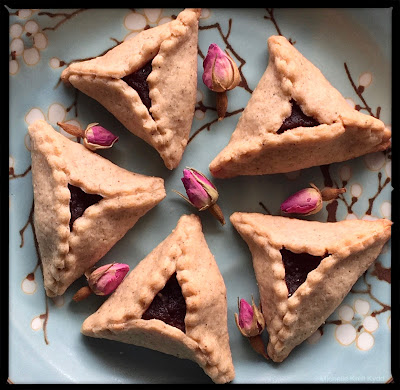
Baking with Flavor: Spiced Rose Hamantaschen

Bronx bakeries of my youth sold large, unruly hamantaschen. Eating them was a war between front teeth and a solid wall of dry cookie dough that cracked and crumbled with every bite. Elastic textures of apricot, prune and poppy seed filling offered little reward for the effort it took to get to the center of the triangular-shaped pastry. Taking a bite out of the holiday cookie eaten on Purim symbolizes victory over Haman in the Book of Esther. The only thing my friends and I tasted when we ate bakery hamantaschen was irony.

No one should sacrifice teeth or good taste for the sake of eating hamantaschen. Buying one from a bakery is still a gamble to which the offense of preposterous fillings and decorations can be added. What can a person who craves descent tasting hamantaschen do?  

The solution is making butter-based hamantaschen from scratch. Butter supports a light flakey texture in the pastry. Shortening and excess sugar are key offenders in bad bakery hamantaschen (they're responsible for hard textures in pastry that taste of nothingness). Does the thought of tender-at-the-bite hamantaschen make your mouth water and whisking wrist tremble? Just wait until you work the aromatic dough with your hands when you make Spiced Rose Hamantaschen (it's a textural hybrid of piecrust and shortbread).

Hamantaschen dough deserves more attention as a flavor source versus a neutral foundation for pastry filling. Citrus zest and vanilla are used to flavor the dough in traditional hamantaschen. Quality fruit fillings are hard to come by, so it's not uncommon for bakers to make their own by cooking dried plums (prunes) or apricots with sugar and water. The finished product is a concentrated fruit butter called lekvar. The balance of citrus zest and vanilla used in the dough complements the flavor profile of tart stone fruits. 

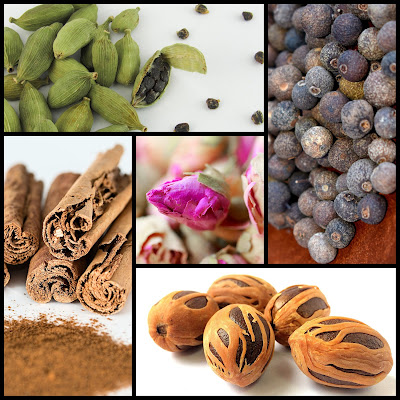
The recipe for Spiced Rose Hamantaschen follows the style of complementary flavor support in traditional hamantaschen—with a twist. Cinnamon, dried rosebuds, allspice, nutmeg and cardamom (Pereg Mixed Spices for Koobah) are added to the dry ingredients in the recipe. Almond extract and Eden Botanicals Organic Rose Hydrosol (a food grade distillate of essential oil of rose) are whisked into the egg mixture. The unique combination of flavors in the dough is a nod to Mizrahi and Sephardic baking traditions. 
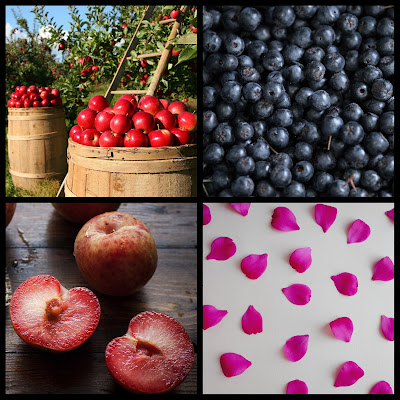


Rose isn't an outlier when it comes to flavor. Like apricot, plum and other stone fruits, the rose is a member of the Rosa genus of plants in the family of Rosacea. Edible seed-bearing fruit from various rose species are called rose hips. They have a tart, fruity flavor profile versus fresh rose petals, which taste like roses smell. Dried pink rose petals have a bright spicy floral character with nuances of delicate citrus. Dried red rose petals have an earthy-musky, fruity-floral flavor profile with a touch of warm spice. 

Cracovia Rose Hip Lekvar is an exquisite filling used in Spiced Rose Hamantaschen. The imported Polish lekvar is a popular filling for paczki (donuts) and kolaczki (cookies), which is why it's easy to find at local Polish food shops across the country. The ingredient list includes: apples, plums, chokeberries and rose flavor (the latter possesses an exquisite citrus-floral quality that's similar to the character of rose aroma in Eden Botanicals Organic Rose Hydrosol, which is made from pink Rosa damascena flowers). 
Recipe Origin & Adaptation for Spiced Rose Hamantaschen

Spiced Rose Hamantaschen is an adaptation of a hamantaschen recipe in Maida Heatter's Cookies (Andrews McMeel Publishing, 1997). I've changed the flavor structure and edited the instructions. Anyone using this recipe may increase the number of cookies by using a 2.75 inch pastry cutter (48 cookies give or take). The single jar of rose hip lekvar will work for both cookie yields as long as the filling is leveled before being placed on the dough rounds (you won't need more because it's packed with flavor).

The baking temperature is reduced from 400 degrees to 375 degrees for optimal pastry texture (you can always increase time based on oven temperament or bake at 400 degrees). Forming hamantaschen on parchment-lined cookie trays after cutting rounds on a pastry mat replaces instructions to form pastry in hand (the latter doesn't work). Using all-purpose flour with too much protein will cause the dough to fall apart when you form hamantaschen and it can't be remedied. Guidance regarding flour protein content is included below the ingredients list. A mixer isn't needed for this recipe.

Spiced Rose Hamantaschen
Recipe by Maida Heatter
Flavor Development/Instruction Modification by Michelle Krell Kydd
Yield: 27 cookies

Ingredients 
*Be sure to use unbleached all-purpose flour that contains 3g of protein per 1/4 cup serving of flour. Some all-purpose flours have upwards of 3g of protein per serving, and hamantaschen pastry dough will not hold together at high levels of protein. Read the nutrition label on the bag of flour to ensure baking success.

Instructions 
  • Sift the flour, baking powder, salt, sugar and Koobah spice into a large mixing bowl. 
  • In a small bowl, beat the egg with almond extract and rosewater. Set aside.
  • Cut the stick of butter into small cubes by cutting horizontally, then vertically. Add cubed butter to the dry ingredients and coat them. Press the cubed pieces of butter flat to form petals. Combine the butter petals with the dry ingredients until the mixture resembles coarse crumbs. 
  • Make a well in the center of the bowl with the dry ingredients and add the wet ingredients. Mix the dough with your hands until it is completely moistened. Gently work it in the bowl and form a single mound of dough that holds together well (it will feel less cohesive than typical cookie dough, which changes after refrigeration). 
  • Separate the single mound into two mounds of equal weight. Wrap each one in plastic wrap and place them side by side in a gallon-sized plastic bag with a zip seal. Refrigerate the dough overnight for a minimum of six hours to a maximum of 18 hours (longer is better for flavor).
  • Line two cookie trays with parchment paper when the dough is ready to use. Set aside.
  • Work with one half of a mound of refrigerated dough at a time, keeping the other half refrigerated. 
  • Roll the dough into an even 1/8-inch thickness on a pastry mat, working quickly as the dough tends to be sticky (short quick rolling helps). 
  • Cut the dough into rounds with a plain or scalloped 3-inch cookie cutter. You’ll fill the dough and shape it after you cut 7 rounds. (Each half a pastry mound yields approximately 7 cookies). 
  • Move the rounds to a parchment-lined cookie sheet using a long confection spatula (a small, flat silicone cookie spatula will also work as it's flexible). 
  • Scoop a teaspoon of the filling using a one-teaspoon measuring spoon, removing the excess filling from the bottom of the measuring spoon (a form of leveling) and adding the excess filling back into the jar. 
  • Place the leveled filling into the center of each round using an additional spoon to scoop it out.
  • Make a triangle shape by folding up two sides of the dough (each side is equivalent to a third of the circle) and pinch the corners together where they meet. 
  • Fold up the third side and pinch together at both sides, forming a triangle and leaving an opening at the top (don't close the center). The filling should be just above the top of the pastry. 
  • Continue rolling, cutting, filling and shaping the dough rounds until you've finished using all of the refrigerated dough.
  • Adjust the arrangement of hamantaschen so that each one is 1 1/2 inches apart (1 inch for cookies made with a 2 3/4 inch pastry cutter) when you're done. Take advantage of the geometry of the cookie, as triangular shapes can be placed at different angles without touching while baking.
  • Divide the oven racks into thirds and preheat the oven to 375 degrees. 
  • Bake for 12 minutes, reversing sheets from top to bottom and back to front after the first 6 minutes. The cookies should be barely colored on the sides, slightly darker on the edges. Add 1-2 minutes if needed, based on the temperament of your oven.
  • Move the baked hamantaschen to cooling racks and allow them to them cool completely. Store them in an airtight container between layers of parchment paper for 24 hours before eating. The resting period allows the flavors to meld. 
Creating memorable flavor combinations requires patience and imagination. You never know what can happen when you find an ingredient that inspires you. Case in point. Food writer Heather Eddy fell in love with the lemon-vanilla-orange blossom bouquet in Fiori di Sicilia. She liked it so much she decided to wear the flavor extract as perfume because it's made of food grade essential oils. If this rings your hamantaschen bell here's a little inspiration for you. Fiori di Sicilia is an olfactory cousin of Eau de Cologne. Imagine what Fiori di Sicilia infused hamantaschen dough filled with bergamot marmalade or lemon curd would taste like. 

Notes & Musings
Pereg Mixed Spices for Koobah is available online at Pereg Gourmet ($8.60 for 3.5 oz). The spice mix can be used in savory and sweet applications. If you'd like to substitute a variation of the spice blend that you can make at home, follow the proportions in the ingredient listing for Koobah located in the fifth paragraph of this post. Be sure to use Ceylon cinnamon as that is the type used in the spice mix. Organic pink rosebuds can be purchased from online spice shops. You'll have to separate the petals from the stem at the base, which is a lovely thing to do. 

Eden Botanicals Organic Rose Hydrosol is available online at Eden Botanicals. The recommended purchase size is 4 ounces ($14.00) as it needs to be refrigerated after opening. Rose hydrosol can be used to flavor coffee, tea or hot chocolate. (It also makes a great face toner and is lovely when sprayed on bed sheets before going to sleep, so go up a size if it's something that appeals to you.) 

Cracovia Rose Hip Lekvar is available online at the Polish Art Center in Hamtramck, Michigan. It's fresh and competitively priced ($3.80 for a 12.34 oz jar). Note to sharp-eyed readers of ingredient labels: rose hips aren't listed on the jar of Polish rose hip lekvar. This is permitted by European Union regulations when the amount of a specific fruit in a mixed fruit jam is under 2%.  

Jam is thinner than preserves, and has a tendency to leak out of the hamantaschen pastry while it's baking. If you choose preserves for your hamantaschen recipe make sure that pectin is included in the ingredient list (it’s a natural fruit-based gelling agent).

The best rose preserves are made with sugar, rose petals, lemon juice and pectin, but they lack the thickness required for hamantaschen filling (they'll weep in the oven). If you're a determined experimenter, hack a jar of Maharishi Ayurveda brand Organic Rose Petal Spread and turn it into lekvar with other ingredients.

Photo of Spiced Rose Hamantaschen on a plate by Michelle Krell Kydd. All rights reserved. Ingredient image collages created with various Creative Commons photos from Pixabay. Image of person pouring flour on a table by Mae Mu on Unsplash.

Tuesday, April 26, 2016

Food Memories: Red Shoes and the Art of Cookie Face


I was five years old when I received a pair of red shoes the color of candy apples. The undyed leather soles were perfectly stitched and smelled like singed salt on a hot pretzel from a food cart vendor on Fordham Road. Inside each shoe was a rubber arch called a cookie that the salesman at Foot Adductor glued beneath the insole. The cookie was the same color as a pencil eraser, but it wasn't as soft. I didn't know what flat feet were and remember feeling somewhat perplexed because ducks had flat feet and I wasn't a duck. I also wondered why someone would put something called a "cookie" inside your shoe that you couldn't eat.

I must have looked at a lot of sidewalks when I was five because whenever I recall this time in my life, all I can see are those new red shoes. One foot in front of the other, moving slowly at first, then picking up the pace while holding hands with a grown up. I remember the asphalt blurring beneath my feet when Dad and I had to run under the elevated train tracks to cross the street in order to make the light or avoid pigeon dropings on our weekly trips to Weber's Bakery.


There were times the sidewalk seemed to move like a conveyor belt. When you're little you can't look over the crowds and figure out how you're going to get where you're going. That's a grownup's job. I'd look left and right when something caught my eye, but most of the time I marveled at my feet and the magic of walking. From 191st Street to Jerome Avenue, under the IRT past Tru-Form Shoes and the florist. I skipped over sidewalk cracks and random black patches of old gum until the smell of Weber's Bakery stopped me in my tracks.

Once inside the bakery, a distinct mix of anise, cinnamon, lemon, orange and vanilla left me in a condition that is best described as "smellmatized." Loaves of fresh bread with light and dark caramel colored crusts were stacked behind the counter by the cash register. You could smell an occasional burst of caraway when a seeded loaf of rye bread was being sliced, but the aroma never asserted itself into the perfume of the bakery. It hovered over the bread slicer and quickly disappeared.


Each loaf of bread sold at Weber's was had a white piece of paper the size of a postage stamp affixed at the heel. It was marked with the symbol of the New York City bakers union. If you were ravenous when you arrived home and were quick to make a sandwich there was a good chance you'd eat the thin paper stamp without a care in the world (they were impossible to remove completely). One day archeologists will discover these stamps inside the stomachs of some of the biggest bread eaters in New York City.

There were four triple shelved cases of pastry that contained desserts inspired by France, Ireland, Italy and Eastern Europe, including a few cognates that made sense to bakers whose families had been in America long enough to assimilate new traditions. If you were a little kid you were surrounded by delicious at eye level. The experience was torture or resulted in a treat. The outcome depended on your parents.


It was Dad, me, my new red shoes and a scam I ran every time the two of us went to Weber's Bakery. I called it cookie face. It was a fun-loving game of food mischief with eleven distinct steps.

Step One:
Inhale at arrival.

Step Two:
Let Dad take a number so he can get a loaf of rye bread.

Step Three:
Smile at the mean looking lady with the hairnet who is wresting red and white striped bakery string to secure a box of pastry for a customer.

Step Four:
Look at shoes.

Step Five:
Walk up to cookie case.

Step Six:
Take a long deep breath.

Step Seven:
Look at cookies and then look at Dad (who always winks on cue at step seven).

Step Eight:
Look at mean lady with the hairnet and smile a little even though she scares you because her stone-faced demeanor makes it look like she doesn't have any lips.

Step Nine:
Look at cookie case and be sad.

Step Ten:
Look at the mean lady with the hairnet and smile a little longer even if she scares you more than the horror movies you watch on television despite being told not to do so.

Step Eleven:
There's no step eleven unless you goofed somewhere between one and ten. You receive a handful of colorful cookies wrapped in bakery tissue as a reward for being cute.

If the mean lady with the hairnet was extra careful when handing over the cookies it meant a rainbow bar or petit four was tucked inside. You'd smile, show the loot to your Dad, and say thank you to the scary lady who wasn't so scary when she smiled and gave you cookies.


We left the bakery with our respective edibles in tow. I skipped and stepped on cracks as I ate my reward, sharing some with my co-conspirator. When we were done Dad opened up the white wax paper bag with the sliced rye bread and we'd each take an end piece and gobble it up gleefully. Sometimes we didn't stop at the end piece and had a lot of explaining to do when we got home. It was funny for us, but not so funny for anyone who thought they were going to get a whole loaf of rye bread when we got home from Weber's.

Notes:
This story is dedicated to the memory of my father, Paul Krell, who taught me everything I know about how to enjoy life and food. He was born on May 1, 1927 in Brzeziny, Poland and died on May 30, 2009, in Bronx, New York. He was a Holocaust survivor and U.S. Army veteran.

Norm Berg was the head baker at Weber's Bakery in the Bronx when I was growing up. He and Stanley Ginsberg co-wrote Inside the Jewish Bakery just before Norm passed away. The book and errata are highly recommended as this is an historic account of bakery culture in New York. Stanley Ginsberg, a passionate baker, has authored a new book titled The Rye Baker: Classic Breads from Europe and America. It will be released in September 2016.

Norm Berg's son, Nathan Berg, was the baker at Vandaag in NYC. I tasted breads he baked before the combination bakery and cafe closed in 2012. Some of the best bread I have ever tasted was made with Nathan's hands.

If you want to understand the role that bakeries played in Bronx culture (and NYC for that matter) pick up a copy of Inside My Father's Bakery by Marvin Korman. It should be a movie (note to Steven Spielberg and Dustin Hoffman).

Sidewalk Flowers is a wordless picture book for children by poet JohnArno Lawson and illustrator Sydney Smith. One of the most charming things about Sidewalk Flowers is how it illustrates father and daughter relationships. The image of the book cover accompanies this post. You don't have to be a kid to read this book. It's timeless and highly recommended, as is this promotional video for the book.

Image of needle tatted flower garland made from bakery twine by Jenny Doh. Used with permission.

Saturday, December 1, 2007

In Search of a Cookie (Part Two): Cuccidati Revealed


A week after John and I discover pastry bliss at Bruno's, I find myself thinking about his cemetery visit and the direction it is taking both of us. Determined, bleary-eyed and under-caffeinated, I enter Antoinette’s Patisserie in search of a drink dubbed the Euro; a magnificent beverage based upon cappuccino served in Italy. The Euro is smaller than its American cousin and the milk is steamed to scalding, breaking down the sugars and eliminating the need for sweetener.

Chef Antoinette Beham and I have become good friends over the years as we share a mutual love of baking. When I enter the patisserie, she calls me into the back of the kitchen and I accept her invitation with anticipation. I greet Antoinette, a petite woman with soft brown eyes and a large cake knife in her hands, and am requested to taste cuttings of two different cakes she’s designed for a wedding. The cakes are physically identical in terms of size and shape and I’m not given any clues about flavor. Antoinette is using my skills a professional “nose” to evaluate taste and flavor in each cake. Since I’m a sucker for dessert and she has a knife, I willingly oblige.

The first cake is positively decadent—three layers of syrup-infused sponge dressed in white chocolate mousse. I enjoy the textures and mouthfeel, but there isn’t enough contrast in the flavors. The next cake looks similar, but the taste is out of this world. It’s a refreshing lemon mousse cake that has the same structure as the first cake, but the contrast of refreshing lemon filling and delicate mousse against the fluffy moist texture is heavenly. It’s so delicious I have a second slice to make sure I’m not dreaming. If the bride-to-be doesn’t choose this cake her marriage is doomed.

“I’m not  particularly fond of the white mousse cake and I’ve tried to tell the customer that white chocolate mousse is better with something strong, like dark chocolate cake,” says Antoinette. I agree, adding that white chocolate is not true chocolate, a subject for future culinary debate. I begin to tell her about John’s cookie quest and her eyes light up. She calls for her sister, Tina, who also works in the patisserie. “You’re friend is Sicilian, isn’t he?” Antoinette asks, her intonation indicating that she already knows the answer, being half Italian herself. “Yes, he is,” I reply. “We went to Rocco’s and Bruno’s in the city and couldn’t find the cookie.” Antoinette looks at Tina and smiles. It is evident that they have had this cookie or at the very least, are familiar with its spirit.

Antoinette, a former pastry chef at Le Cirque, stops to think and says “I know that cookie. It’s probably one of those cookies that someone’s grandmother made in Sicily, maybe a holiday cookie with Italian mincemeat, like a pierogi that has been sliced. It’s not mustazzouli, but I’m not sure what it’s called. Those kinds of cookies don’t get into bakeries like canoli. It’s funny. I have been thinking about them for the past week and want to make them myself.” The next day I return for coffee and strike up another conversation with Antoinette. She reflects on her days as a student at The Culinary Institute of America and a research assignment she had to do on the subject of walnuts. “You know, you discover all kinds of interesting and odd facts when you go to the library to do food research.” Later that evening, I raid Google with the resolve of a bloodhound. “Okay, think. Search smarter,” I tell myself. Then I type the magic words, “Sicilian baking.” Jackpot.

Anna Maria Volpe is an Italian chef with Roman and Sicilian roots. Her website has a variety of recipes and in the dessert section there is a Sicilian fig cookie called cuccidati (also known as buccellati). She has taken Chef Nick Malgieri’s recipe for cuccidati and adapted it to suit her taste, (I have done the same with ma’amoul, adding homemade Tahitian vanilla extract and China cassia cinnamon to the date paste mixture). I call John J. Miceli at 9:30 p.m. “I think I found your cookie, but I’m not sure.” I do my best to pronounce the names in Italian, reading the filling ingredients one by one. “So, what do you think?” I ask him. “It sure sounds like it, especially the spicy part,” he says, his smile evident over the phone line. We decide to see if De Robertis Caffe in the East Village sells cuccidati.

It’s a strange autumn day in October. The the sky peals with sunshine one moment and bawls rain the next. John and I are walking east on 14th Street, towards the café. As we pass Veniero’s, John tells me that the De Robertis Caffe's history spans four generations and that many of the Italian bakeries in the area are now run by families of Arabic descent. Opened in 1904, De Robertis occupies the same New York City block that it did at its inception. John’s mother grew up in the area and it is one of the reasons we have decided to explore its desserts. It turns out that De Robertis doesn’t sell cuccidati, but Joseph, one of the managers, tells us that the cookie is sold in December for the holidays. We’re so close to solving the cookie mystery, but have to wait two months longer. 

The following week I meet with Antoinette and she suggests I look for a more authentic recipe than the one Volpe re-orchestrated. I find a cuccidati recipe by Marianne Esposito that appears to be genuine, but lacks the flavor register of an “ah-hah” moment. I’ve seen Esposito’s programs on public television and she shares Sicilian recipes that are faithful to tradition. I come to the conclusion that John’s cuccidati is slightly Americanized and that Volpe’s recipe, which resonates strongly with John’s memory of a childood cookie, is the best clue we have. The pursuit of the cookie is put on hold as I prepare to fly to Chicago the next day. Unbeknownst to me the spirit of Beppina, John’s aunt, is getting restless. 

While in Chicago I have the luxury of spending two hours alone on Michigan Avenue, following a day of tedious business meetings. I find myself craving coffee after a bit of window shopping, but refuse to find solace in a plethora of Starbuck’s that populate the neighborhood. I was about to give up and go back to the Westin Hotel when I passed by the John Hancock building and discovered a food court on the lower level.

I venture inside L’Appetito, an Italian café and deli, and stand on the coffee queue. When I get to the cashier, I notice a pastry case and am immediately struck by a tray of cookies that look like the cuccidati on Anna Marie Volpe’s website (the sprinkles were a dead giveaway). I ask for a half dozen and head for my hotel room. Once inside, I sit at a desk and carefully remove two cookies which are wrapped in a piece of transparent waxed paper inside the bag. The gustative recognition is instant; every taste that John had described is inside these cookies; the small bits of chocolate, orange peel, traces of clove, fig paste, and faint hints of espresso.

I call John and tell him what I’ve found. It isn’t even December, but there are cuccidati in Chicago. The other four cookies never make it back to New York. I eat them on the plane ride home, 20,000 feet above the ground, and wink at aunt Beppina in the clouds.

Notes:

Anna Marie Volpe’s recipe for cuccidati (complete with demonstration photos) can be found here. Her recipe is a dead ringer for the cuccidati at L’Appetito. I’ve made these a few times and prefer to omit the sprinkles.

Antoinette's Patisserie is located in Hastings on Hudson, a quaint village in Westchester. A 40 minute ride on the Metro North (Hudson line) will take you from Grand Central Terminal into the village of Hastings. The ride is extraordinarily scenic with impressive views of the Palisades on the western side of the river. The patisserie is a ten-minute walk from the station.

Update: John J. Miceli was a dear friend and colleague at New York Magazine. John died in his home on Horatio Street in New York City on November 29, 2023 surrounded by family. His obituary is a wonderful tribute to a gentle, loving and caring human being who embraced life with gusto and a marvelous sense of humor. This article was written nearly 14 years before the day of his passing.

Part one of this story can be found here. 

Photo of cuccidati from Baking Delights.