Roman Kaiser is a native of Switzerland. He is a chemist, naturalist and perfumer. Dr. Kaiser has spent a good part of his professional life analyzing plants and their scents. In his new book, Scent of the Vanishing Flora, he shares details on 267 endangered flowers that are disappearing due to habitat loss. He has graciously agreed to take the Glass Petal Smoke "Sensory Questionnaire" and share his flavor and fragrance memories.
1. What does your sense of smell mean to you?
The sense of smell adds a dimension of perception to my life which is, in its intensity, equal to the sense of vision and hearing. Although I always had a high affinity to this perception it developed immensely during my forty years of studying natural scents at
Givaudan. During this time I evaluated around 9000 scented plant species from which I had the opportunity to study an additional 2700 plants on the same scientific level. This broad olfactory experience with scents helps me to understand many things I encounter in this world, which also brings me also closer to people around me. Not less important is the fact that the sense of smell enormously enhances my acoustic and visual perception and, to a certain degree, vice versa. Thus, if I hear Vivaldi’s “The Four Seasons” the corresponding typical scents, as you would experience them in my home country of Switzerland, become active in my olfactory mind.
2. What are some of your strongest scent memories?
At the age of 12
I had to spend a rather long time in a hospital. One of the nurses always smelled of a famous
fougère soap which is still available today. She was always kind to me and in this situation I associated the scent with all of the things that make life worth living.

Earlier, when I was a small boy, I discovered a place in a nearby forest with huge amounts of wild strawberries, a secret place which I never failed to visit. This is certainly the reason why I understand the strawberry’s olfactory concept very well.

Another discovery I made around this time was in a sun-flooded pine forest in the foothills of our region. There was a group of plants with flower stems rising to a height of 30 centimeters, each with as many as 15 to 20 dark purple-red flowers which had a wonderful vanilla-like and aromatic spicy fragrance. This fragrance helped to imprint the plant’s visual appearance so that 25 years later, when I started to study orchids in more detail, it came back to my mind and I could identify it before seeing it again as
Epipactis atrorubens. I went back to this habitat and was happy to find this population still existing and see that it was, indeed,
Epipactis atrorubens, the so-called Dark Red Helleborine.
3. What are some of your favorite smells (things in nature, cooking and/or your environment)?
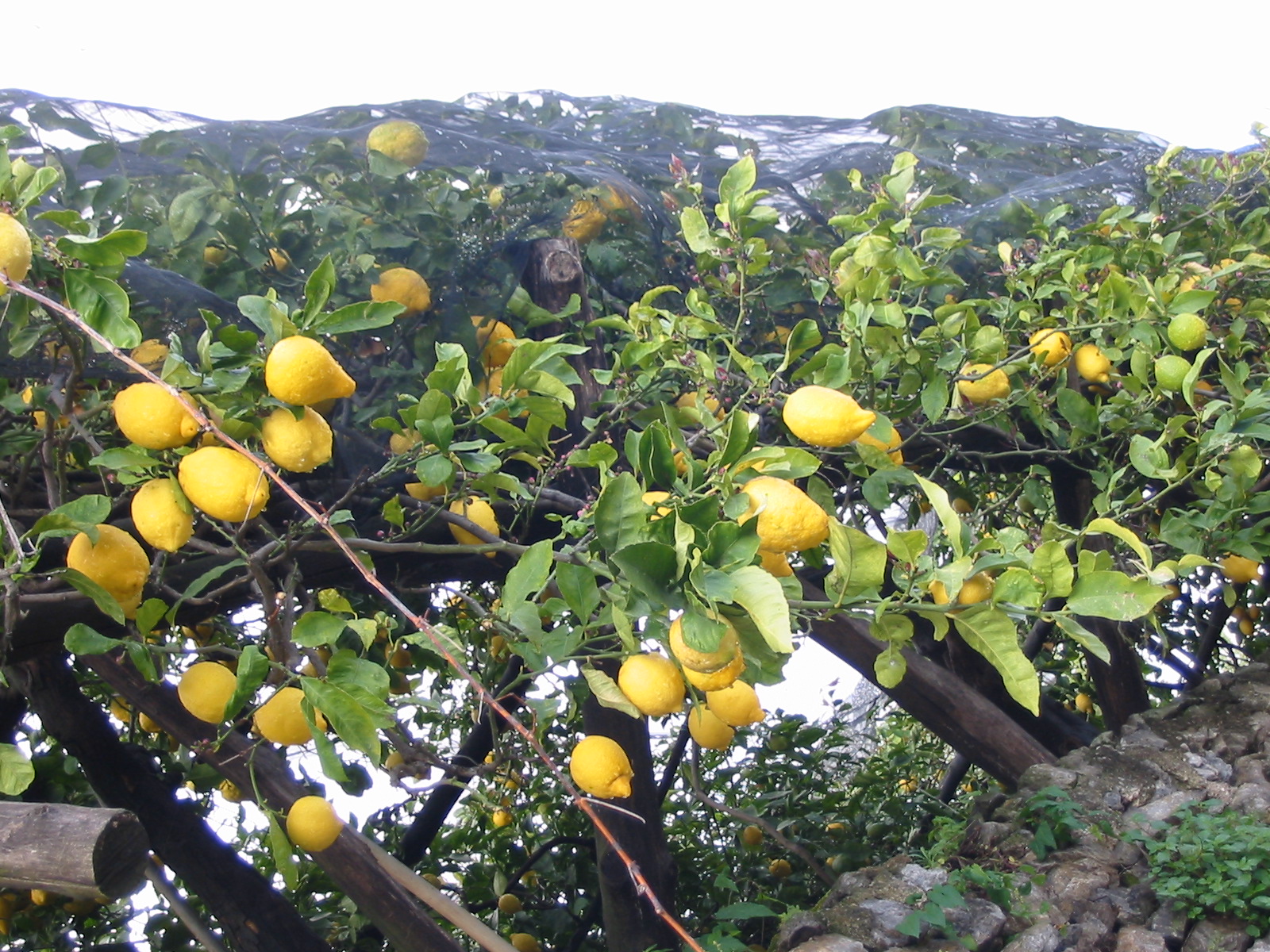
Fully ripe lemon fruits which one may find along the Amalfi coast in Italy. I was so attracted to this scent that I studied it in more detail in the mid 1980’s. As a result I discovered that
methyl epi-jasmonate is strongly accumulated on the peel surface and gives this unique far-reaching
hesperidic floral note.
It is no wonder that I also feel drawn to the scent of the To-yo-ran Orchid
Cymbidium goeringii. This flower scent is also very rich in methyl epi-jasmonate and related jasminoid compounds.

Another of my favorite scents is the olfactory ambiance along a Mediterranean pine forest during a sunny afternoon. As I finally discovered the characteristic part of this scent, a wonderful musky-woody note was arising, not from the needles, the cones or the wood, but from the sunshine-exposed resin. Under such conditions long chain hydroxy acids present in the resin may internally cyclize to macrocyclic lactones* that are responsible for this olfactory delight.

My third favorite smell is one that rises from burning
agarwood; the wood of the gods. Many years ago I spent an evening in New York as a guest in a house where high quality agarwood had been transformed into this heavenly incense smoke. It is beyond a simply pleasant smell – it invades your lungs, your entire body and mind, taking total possession of you. You smell it for days, sometimes wondering what it might be and where it might be coming from, then it comes back to your mind as a constant reminder.
4. Do you have any favorite smells that are considered strange?
No, not really, but people around me sometimes have the idea that I possess a special love for strange scents. For example, they may see me sniffing at wet rocks or snow in the mountains, but there is a good reason for this; on wet rocks you may find certain algae species emitting interesting scents. One species is even capable of degrading
carotenoids to
beta-ionone and related compounds. Finding a violet-type scent in algae species is quite an experience. At such high altitudes there are also scent producing algae which may be found on snow or ice. Such is the case of
Chlamydomonas nivalis, which emits the scent of watermelon.
5. Describe one or more of your favorite cooking smells.
The smell developing if you briefly roast cut aubergine in a good olive oil is a real olfactory revelation; it is the aroma that tells you how to use this delicacy in gourmet recipes. An equally fascinating yet quite different smell develops if you briefly roast scallops in high quality olive oil.
6. What smells do you most dislike?
Carrion, skunk in action and rotting aubergine.
7. What smell did you first dislike, but learned to love?

It took me a rather long time to learn how to appreciate the highly characteristic scent of white truffle. One of the reasons might have been my exposure to many olive oils that are over-flavored with white truffle essence. I often had the feeling that they were too strongly fortified with the impact chemical of white truffle,
2,4-dithiapentane, which is, however, a great product at the right dosage.
8. What mundane smells inspire you?
Freshly brewed coffee, freshly baked bread, rain after a hot day, and the smell of people as they pass who are wearing a good fragrance.
9. What scent never fails to take you back in time and why?

 Lime Tree blossom
** and
frankincense are two characteristic scents of my youth which work exactly in this way. The tender and romantic scent of lime tree blossom is emblematic in Middle Europe for feeling at home and no one has better expressed this than Franz Schubert with the famous song “
Am Brunnen vor dem Tore.” This is how I experienced this magnificent tree and its flower scent in my home village near
Mount Säntis in eastern Switzerland, magical to all those living around it. It is also admired in cities. What would Zürich’s famous “
Bahnhofstrasse” be without the lime tree! Everybody experiencing it during its flowering in June is enthusiastic about it. The most impressive feature of my rather small home village is a baroque church dominating everything. If I recognize frankincense in a fragrance I have to think immediately of these Sunday services I always attended as a boy. I re-experience the sacred music, the glamorous liturgy and this unique scent pervading everything.
10. What scents do you associate with memories of loved ones?
11. What fragrance(s) remind you of growing up?

There’s the two I previously mentioned; lime tree blossom and frankincense. Other fragrances that strongly remind me of growing up are also closely connected to my home village which is surrounded by hills and forests. The scents of flowering meadows as well as those of the hay produced from them are imprinted in my olfactory memory. In the forests I could never resist sniffing the pine and fir resin and I even know how they taste. This is because as a boy I read a book which said that the Indians of North America would chew, instead of chewing gum, such tree resins. I was also exposed to beautiful flower scents at a very young age because my father had a nursery and cultivated, among others, roses, sweet peas and all types of spring flowers for the flower trade.
12. What fragrance(s) remind you of the places you visited on vacation?
The scent of sun exposed pine resin, which I previously described, reminds me of my visits to the
Ligurian coast and the
Côte d’Azur. But much earlier I became preconditioned to the unique, baroque, aromatic-floral, vanilla and cocoa-related scent of the
Black Vanilla Orchid, a rare and precious jewel of our mountain meadows. This fragrance type carries me immediately to the Swiss mountains where we spend some of our vacation days every summer. In a similar way the scent of carnation (type
Dianthus caryophyllus) carries me to the very small island of
Hoëdic, situated in the Atlantic around 30 kilometers south of Quiberon in France. If you visit this island at the end of June or beginning of July you can already smell the very spicy-floral scent of carnation 300 meters before arriving at the harbor. Exploring this tiny island you will find the source of this unique environmental scent in a countless number of flowering
Dianthus gallicus which for me, places Hoëdic
among the 100 unforgettable olfactory sceneries of this world.
13. Describe a piece of sensory literature that is very magical for you.
There are many books in this domain worth reading, but to start I would suggest
Jitterbug Perfume by Tom Robbins. But do not believe too much in the flower and pollen scent of red beets; they are not as magical as described.
Notes:
*Macrocyclic lactones in plants are usually responsible for their musk aromas.
**Lime Tree is the European reference to the Linden Tree. They are one and the same.
Photograph of dark red helliborine taken by
DJS Photography. Many beautiful prints are available for purchase on the website.
Photograph of agarwood (also known as aloeswood and oud) is from
Shoyeido, a fine purveyor of agarwood chips for incense burning.
Photograph of
Chlamydomonas nivalis growing on an Austrian mountain taken by
Petr Jan Juračka.
Photograph of Black Vanilla Orchid from
Plas y Brenin.
Photograph of the alpine strawberry taken by
Terry Ferdinand of the BBC.
Photograph of skunk in the act of spraying from
PBS.org.
Photograph of frankincense burning on charcoal by Michelle Krell Kydd.
Photograph of Dr. Roman Kaiser has been provided by Givaudan.